
Title Deed & Iskan
Kat İrtifakı or Kat Mülkiyeti? What You Own When a Turkish Flat Has No Occupancy Permit (Iskan), How the Title Converts and What the Seller Owes You
A flat in a building that has no occupancy permit (yapı kullanma izni, known as iskân) can still be bought and registered in your name in Türkiye. What changes is the kind of title you receive. This guide reads the Condominium Law No. 634, the Zoning Law No. 3194 and the sale rules of the Code of Obligations No. 6098 as they stand on 15 November 2026, and explains what a construction-servitude title (kat irtifakı) gives a buyer, how it converts into condominium ownership (kat mülkiyeti), and what a buyer can claim from the seller.
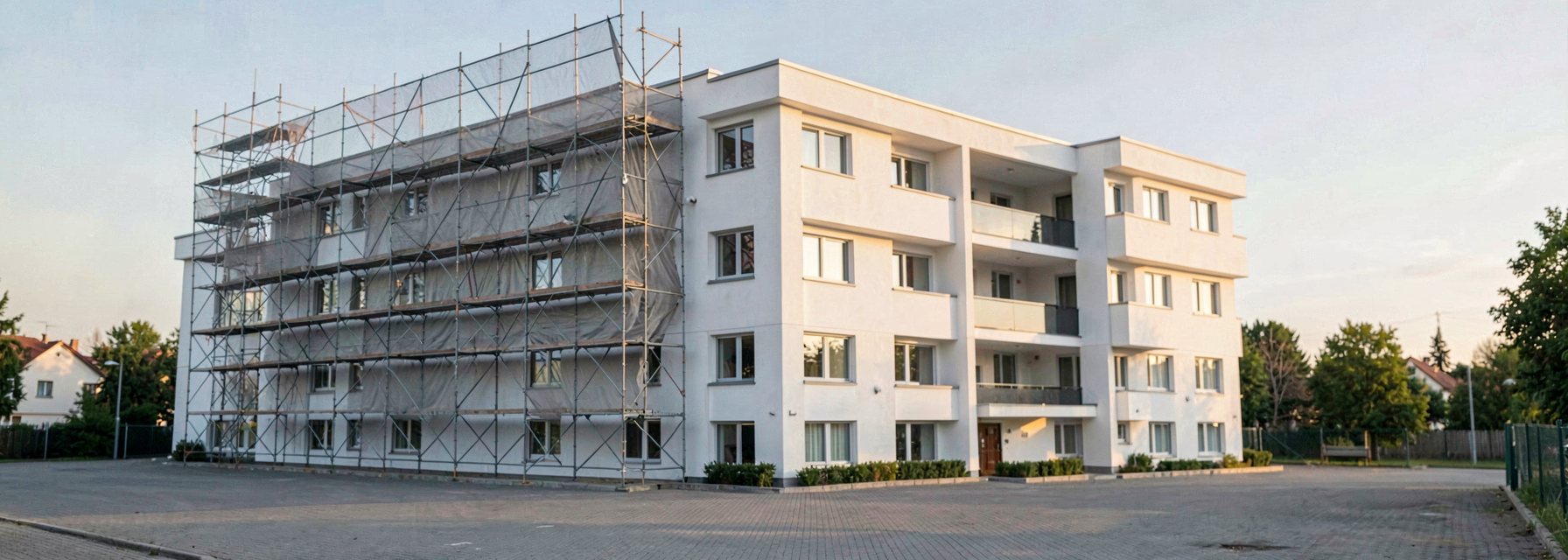
Can you buy a flat in Türkiye in a building that has no occupancy permit (yapı kullanma izni, iskân)? Yes, but not yet as condominium ownership (kat mülkiyeti), apart from the separate route in Provisional Article 16 of the Zoning Law described in section 3; the right registered for such a flat is a construction servitude (kat irtifakı) where one has been established. Article 12(a) of the Condominium Law No. 634 lists the occupancy permit among the documents needed to establish condominium ownership, and Article 3(3) provides that the servitude is converted ex officio into condominium ownership on the permit issued for the whole building. Article 31 of the Zoning Law No. 3194 bars electricity, water and sewerage for a building without a permit, except for sections with their own permit. Against the seller, the buyer has the contract and, where the missing permit amounts to a defect for which the seller is liable, the defect rules in Articles 219 to 231 and 244(3) of the Code of Obligations.
This guide follows the text of the legislation. It does not describe how municipalities, land registries or courts act, how long anything takes or what it costs.
1. What Is an Occupancy Permit (Yapı Kullanma İzni) and Who Issues It?
The occupancy permit is the administrative permission to use a finished building. Article 30 of the Zoning Law No. 3194 (İmar Kanunu) requires it for the whole building once the building is entirely finished, or for the parts that can be used once those parts are finished.
- Who issues it. The permit is obtained from the municipality or governorship that issued the construction permit (inşaat ruhsatı) (Art. 30(1)). In the cases listed in Additional Article 11, the Ministry of Environment, Urbanisation and Climate Change may issue construction permits and occupancy permits itself.
- What is checked. On the owner's application, it has to be established that the building conforms to the construction permit and its annexes and that there is no technical objection to its use (Art. 30(2)).
- The legal date of completion. Article 31 states that the day construction ends is the date on which the occupancy permit is given.
- What the permit does not do. Under the last paragraph of Article 30, a permit given under that article does not release the building owner from liability arising from failure to comply with the Law, the construction permit and its annexes.
2. Kat İrtifakı or Kat Mülkiyeti: What Does My Title Deed Actually Give Me?
The Condominium Law No. 634 (Kat Mülkiyeti Kanunu, KMK) knows two rights over a flat in a building with several units, and the title deed states which one you hold.
- Kat mülkiyeti (condominium ownership). Article 2(a) defines it as the ownership right established over an independent section (bağımsız bölüm). Article 3(1) links it to the land share (arsa payı) and the common parts.
- Kat irtifakı (construction servitude). Article 2(c) defines it as the servitude established by the owner or co-owners of a plot, under the Law, for the independent sections of one or more buildings that are to be built or are being built on that plot with a view to condominium ownership in the future. Article 3(3) calls it a kind of servitude attached to the land share.
- The land share travels with the right. A land share cannot be transferred separately from the condominium ownership or the construction servitude (Art. 5(1)).
- Both arise by registration. Condominium ownership and construction servitude arise by an official deed (resmi senet) and registration in the land register (Art. 10(1)).
On a construction-servitude title, the parcel's register shows, in its declarations column (beyanlar hanesi), the land share allotted to each servitude, and the numbers of the independent sections that will become subject to condominium ownership once the building is completed according to the project, with their annexes (Art. 14(2)). Under Article 13, it is each independent section registered in the condominium register that becomes a separate immovable.
3. How Does Kat İrtifakı Become Kat Mülkiyeti Once the Iskan Is Issued?
Article 3(3) answers this directly: the construction servitude is converted ex officio (resen) into condominium ownership on the basis of the occupancy permit issued for the whole building, under the conditions in the Law, and the conversion may also be carried out on the request of the landowner or of one of the co-owners holding a servitude.
- The permit is issued and sent electronically. Under Article 10(6), the change of the property's type (cins değişikliği) is made ex officio for every building for which an occupancy permit has been issued. The administration authorised to issue the permit sends it electronically to the cadastre office, which prepares a registration notice on the basis of the permit and the building application project (yapı aplikasyon projesi).
- The type change is registered. On the registration notice sent to the land registry, the change of type is registered ex officio without any other document being sought (Art. 10(6)).
- The servitude becomes condominium ownership. If the property whose type has changed carries a construction servitude, it is converted ex officio into condominium ownership on the basis of the official deed registering the servitude and the documents listed in Article 12, without any other document being sought (Art. 10(6)).
- The documents behind it. Article 12 lists the approved architectural project with the occupancy permit (Art. 12(a)) and a management plan (Art. 12(b)). Under Article 14(1), no separate management plan is required on the change to condominium ownership.
A finished flat is not enough on its own: Article 3(3) speaks of the permit for the whole building, and under Article 10(2) condominium ownership cannot be established over some sections before the whole property is converted. In a collective development of several buildings (toplu yapı), Article 66 provides that, as the buildings are completed, the construction servitudes of the completed buildings may be converted into condominium ownership.
Provisional Article 16 of the Zoning Law contains a separate route. For a building that has a construction permit but no occupancy permit, or has no construction permit, the change of type and condominium ownership may be established without the occupancy permit being sought, where there is a building registration certificate (Yapı Kayıt Belgesi), all owners consent and the areas corresponding to public service areas in the zoning plans are ceded (Provisional Art. 16(5)). The certificate itself could be applied for only for the buildings and within the period that article set; a buyer of a flat relying on this route needs to see the certificate.
4. What Does the Zoning Law Attach to a Building Without an Occupancy Permit?
The Zoning Law attaches the following consequences in its text. This guide does not describe how administrations apply them.
- Electricity, water and sewerage. Buildings for which the permit has not been given or obtained are not supplied with electricity, water and sewerage services and facilities until the permit is obtained; independent sections that obtained a permit are supplied with these services (Art. 31).
- Temporary connections. Provisional Article 11 allows water and/or electricity to be connected temporarily, until the permit is obtained, for buildings that meet the conditions and dates it sets. It states that such a connection does not constitute an acquired right (kazanılmış hak).
- Buildings without a construction permit or contrary to it. Article 32 is written for buildings started without a construction permit or built contrary to the permit and its annexes: the building is sealed and construction is stopped, the breach is notified to the land registry for the declarations column, and that record cannot be removed until the administration notifies that the breach has been remedied. Otherwise, the permit is cancelled and the building is demolished by the municipality or governorship following a decision of the municipal council or provincial administrative board, with the cost collected from the owner (Art. 32(1), (5)).
- Administrative fines. Article 42 imposes administrative fines (idari para cezası) on the owner of a building built without a construction permit or contrary to the permit, its annexed projects and the zoning legislation, on the contractor and on the technical supervisors (fenni mesul) who do not report the breach to the administration. The article's increases distinguish, among other things, a completed building that is in use from one that is not.
Article 31 and the provisional rule deal with a missing occupancy permit; Articles 32 and 42 deal with building without a construction permit or contrary to it. A buyer needs to know which situation the building is in. For structural questions, see our guide to defective construction and contractor liability.
5. Living in the Building Before the Title Converts
- Duties to one another. Servitude holders are mutually bound to perform on time their obligations for completing the building according to the contract and the plan (Art. 26(1)), and may demand and sue for that performance from one another (Art. 17(1)).
- Management. Where the building has actually been completed and two thirds of the independent sections are actually in use, the condominium provisions apply to its management even before the change to condominium ownership (Art. 17(3)).
Once the building is under condominium rules, disputes among owners follow the KMK; see our guide to condominium disputes under Law No. 634.
6. Can I Claim Against the Seller If the Flat Has No Iskan?
The sale rules of the Code of Obligations No. 6098 (Türk Borçlar Kanunu, TBK) are the starting point. Article 246 provides that the rules on the sale of movables apply by analogy to the sale of immovables, and the defect rules in Articles 219 to 231 sit among them.
- What the seller answers for. Under Article 219(1), the seller is liable for the absence of qualities declared to the buyer in any way, and for material, legal or economic defects that remove or significantly reduce the thing's value for its intended use and the benefits the buyer expects. Under Article 219(2), the seller is liable even without knowing of them. How a court classifies a missing permit is outside this guide.
- What the buyer knew. The seller is not liable for defects the buyer knew of when the contract was made (Art. 222(1)). For defects the buyer could have seen by examining the thing sufficiently, liability depends on the seller having separately undertaken that no such defect exists (Art. 222(2)).
- Exclusion clauses. If the seller is grossly at fault in delivering the thing with a defect, any agreement removing or limiting liability for defects is void absolutely (kesin olarak hükümsüzdür) (Art. 221).
- Inspection and notice. The buyer must examine the thing received as soon as the ordinary course of business allows and, on finding a defect for which the seller is liable, notify the seller within an appropriate time; a buyer who neglects this is deemed to have accepted it, except for a defect an ordinary examination could not reveal, which must be notified at once when discovered, failing which the thing is deemed accepted with that defect (Art. 223). A grossly at-fault seller cannot rely on late notice, and the same applies to defects that persons who sell as a profession ought to know (Art. 225).
- The four choices. Under Article 227(1) the buyer may withdraw from the contract while declaring readiness to return the thing, keep it and ask for a proportionate price reduction, ask for free repair unless it requires excessive expense, or, where possible, ask for a defect-free equivalent. Damages under the general provisions are reserved (Art. 227(2)); if withdrawal is not justified, the judge may order repair or a reduction instead (Art. 227(4)). A buyer who withdraws may claim the price back with interest (Art. 229(1)).
- Limitation. Article 231 sets the general limitation for claims arising from defects in the thing sold. For buildings, Article 244(3) provides that claims arising from a building being defective are time-barred (zamanaşımına uğrar) five years after ownership passes, and twenty years where the seller is grossly at fault.
The contract matters as much as the statute. A sale of immovable property must be made in official form to be valid, and a promise to sell is not valid unless made in official form (Art. 237(1), (2)). Article 219(1) covers qualities the seller declared to the buyer in any way, and Article 222(2) makes the seller liable for defects the buyer could have seen only where the seller separately undertook that no such defect exists; a written term on the permit, and on when and how the title will be converted, records what the seller declared and undertook. See our guide to the notarised promise to sell real estate.
7. Buying From a Developer Before the Building Is Finished
Where a consumer pays a developer in advance for a home that will be delivered later, the Consumer Protection Law No. 6502 (Tüketicinin Korunması Hakkında Kanun) adds its own layer.
- The contract type. A pre-paid housing sale contract is one in which the consumer undertakes to pay the price of an immovable for housing in advance, in cash or by instalments, and the seller undertakes to transfer or deliver it after the price is paid wholly or partly (Art. 40(1)).
- Construction permit first. A pre-paid housing sale contract cannot be made with consumers before the construction permit (yapı ruhsatı) is obtained (Art. 40(3)).
- Form. The sale must be registered in the land register, and a promise to sell must be made before a notary in the drawn-up form; otherwise the seller cannot later raise the invalidity of the contract against the consumer (Art. 41(1)).
See our guide to buying an off-plan apartment, our guide to late delivery and delay penalties and, where a registered title has to be corrected, our guide to deed cancellation lawsuits.
8. Side by Side: Kat İrtifakı and Kat Mülkiyeti
| Point | Kat irtifakı (construction servitude) | Kat mülkiyeti (condominium ownership) | Provision |
|---|---|---|---|
| What the right is | A servitude attached to a land share, for the sections of a building to be built or being built | Special ownership linked to a land share and the common parts | KMK Arts. 2(a), 2(c), 3(1), 3(3) |
| Documents to create it | The approved project and the management plan | The approved architectural project with the occupancy permit, and a management plan | KMK Arts. 12, 14(1) |
| Occupancy permit | Not among the documents Article 14(1) lists | Listed in Article 12(a) among the documents for establishing it | KMK Arts. 12(a), 14(1) |
| How it appears in the land register | Land shares and future section numbers in the parcel's declarations column | Each section on its own register page, as a separate immovable | KMK Arts. 13, 14(2) |
| Change from one to the other | Converted ex officio on the permit for the whole building, or on request of the landowner or one co-owner | The end point of the conversion | KMK Arts. 3(3), 10(6) |
| Utilities | No electricity, water or sewerage for a building without a permit, except sections that obtained one | Not affected by this rule once the permit exists | Zoning Law Art. 31 |
9. Before You Sign: A Checklist for a Flat Without Iskan
For foreign nationals, Article 35(1) of the Land Registry Law No. 2644 (Tapu Kanunu) provides that, subject to legal restrictions, and in view of bilateral international relations and where the country's interests require, natural persons who are nationals of countries determined by the President may acquire immovables and limited real rights in Türkiye, within the area limits the same paragraph sets. A construction servitude, like condominium ownership, arises by official deed and registration (KMK Art. 10(1)). For the purchase steps, see our guide to buying property in Turkey as a foreigner and our guide to real estate due diligence.
- Read the current land register record and check whether the flat is held as a construction servitude (kat irtifakı) or as condominium ownership (kat mülkiyeti) (KMK Arts. 2, 10).
- Read the declarations column of the parcel for the land shares, the independent section numbers and any record that the building breaches the zoning legislation (KMK Art. 14(2); Zoning Law Art. 32(1)).
- Ask the seller for the construction permit and its annexes, and for whether an occupancy permit has been issued for the whole building or for some sections (Zoning Law Arts. 30, 31).
- Check that the section number and land share you are shown match the register (KMK Arts. 3(2), 14(2)).
- Ask whether any electricity or water connection is a temporary one under Provisional Article 11 of the Zoning Law.
- Put in the contract the seller's statement on the permit and any undertaking on when and how the title will be converted, in the official form the sale or promise requires (TBK Arts. 219(1), 222(2), 237).
- If you are buying from a developer before completion, check that a construction permit exists and that the contract has the form the Consumer Protection Law requires (Law No. 6502, Arts. 40(3), 41(1)).
- As a foreign national, check that the acquisition falls within Article 35 of the Land Registry Law before you pay (Land Registry Law Art. 35(1)).
- After handover, examine the flat and notify the seller of any defect for which he or she is liable, keeping proof of the notice, and note the transfer date for the limitation in Article 244(3) TBK (TBK Arts. 223, 244(3)).
Our real estate and litigation practices advise foreign buyers in English; reach us through the contact page.
Frequently Asked Questions
Can I buy a flat in Türkiye that has no iskan?
Yes. A sale of immovable property is valid in official form (TBK Art. 237(1)), and rights over a flat arise by official deed and registration (KMK Art. 10(1)). The missing permit affects the type of title: outside the route in Provisional Article 16 of the Zoning Law, condominium ownership cannot yet be established (KMK Art. 12(a)), so the title deed shows another right, for example a construction servitude (kat irtifakı).
Will my kat irtifakı title become kat mülkiyeti by itself?
Under Article 3(3) KMK, the servitude is converted ex officio into condominium ownership on the occupancy permit issued for the whole building; the landowner or one co-owner may also request it. Article 10(6) sets out the electronic route from the permit to the conversion.
My flat has its own permit but the building does not. Is that enough?
For utilities, Article 31 of the Zoning Law supplies independent sections that obtained a permit. For the title, Article 3(3) KMK refers to the permit for the whole building, and Article 10(2) KMK does not allow condominium ownership over some sections before the whole property is converted. In a collective development of several buildings, Article 66 KMK allows the servitudes of completed buildings to be converted as the buildings are completed.
Can a flat without an occupancy permit get electricity and water?
Article 31 of the Zoning Law bars electricity, water and sewerage for a building without a permit until it is obtained. Provisional Article 11 allows a temporary water and/or electricity connection on the conditions it sets, and such a connection does not constitute an acquired right.
The seller did not tell me the building had no permit. What can I do?
Look first at what the contract says about the permit. Where the missing permit amounts to a defect for which the seller is liable under Article 219 TBK, applied to immovables by Article 246, Article 227 lets the buyer withdraw, ask for a price reduction, repair or a defect-free equivalent, with damages reserved. Notice follows Article 223; actions arising from a building being defective are time-barred five years after ownership passes, twenty where the seller is grossly at fault (Art. 244(3)).
I knew there was no iskan when I signed. Can I still claim?
Under Article 222(1) TBK, the seller is not liable for defects the buyer knew of when the contract was made. If the seller undertook in the contract when or how the permit or the conversion would follow, a claim can be based on that term.