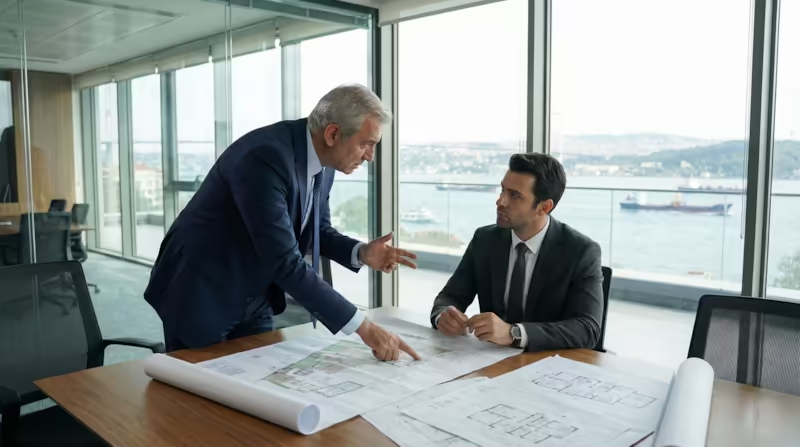

Ownership in Türkiye turns on one document signed at the Land Registry. Everything before that — the reservation form, the deposit, the agent's assurances — gives you a claim against a person, not a property. Most of what we are asked to fix afterwards was visible in the registry record beforehand: a mortgage nobody mentioned, a building with no occupancy permit, a plot zoned agricultural, a developer already in default. If the purchase is also meant to support Turkish citizenship by investment, the valuation and holding rules add a further layer of checks.
Our clients are individual buyers, expat families and investors in Istanbul, Antalya and Bodrum. Many never come to Türkiye at all: a notarised Power of Attorney lets us run the searches, sign the deed and register the transfer. The order matters. Title, then the property, then the contract, then the money — never the other way round.
Can foreigners own property in Turkey?
Yes — and the framework is well established. Under the Land Registry Law No. 2644, nationals of most countries may acquire real estate in Türkiye, subject to statutory limits: a foreign individual may own up to 30 hectares in total nationwide and may not hold more than 10% of the surface area of any single district. Acquisitions inside designated military and security zones are restricted and require clearance. Before you commit to a purchase, we confirm both that the buyer's nationality is eligible and that the specific parcel is not caught by these restrictions — a check that takes days, not the months a rejected application can cost.
Ownership passes at the deed, not the deposit
In Türkiye, legal title transfers only when the tapu (title deed) is signed before the Land Registry registrar. A reservation form, a private sales agreement or a paid deposit does not make you the owner. If someone wants a large payment before anyone has checked the registry record, stop.
Title-deed (tapu) verification & land-registry due diligence
The registry record tells you more about a property than any viewing does. We pull the current record before money moves, to confirm that the person selling is the registered owner and that the property can lawfully be transferred at all. What we look at:
- The registered owner and ownership share — confirming the seller's identity matches the tapu, and that co-owners or heirs have consented where required.
- Mortgages, liens and injunctions (ipotek, haciz, tedbir) that would follow the property to a new owner if left unresolved.
- Zoning and development status — whether the plot is residential, agricultural or in a reserved area, and what may lawfully be built on it.
- Building and occupancy permits — confirming the construction licence and the occupancy permit (iskân), so you are not buying an unlicensed or unregistered structure.
- Outstanding debts — property tax, common-area (aidat) and utility arrears that can attach to the unit.
- Mandatory earthquake insurance (DASK) and, for developments, the construction servitude (kat irtifakı) or condominium title (kat mülkiyeti).
When something turns up, you get the plain version: what it costs, whether it can be cleared, and whether we would buy it in your position. Mortgages get discharged, arrears get settled and missing permits get produced before completion. Otherwise the deal does not complete.
What the purchase contract has to say
Most of the property disputes we litigate trace back to a contract signed only in Turkish, translated loosely, or silent on the one point that later mattered. We draft and review bilingual sale and pre-sale agreements under the Turkish Code of Obligations (TBK No. 6098), fixing the price, payment schedule, fixtures, delivery date and — critically — the precise trigger for transfer of the deed. We build in remedies for the situations buyers most often regret overlooking: late delivery, specification changes, hidden defects and a seller's failure to clear encumbrances. Deposits are tied to defined milestones, not handed over on trust, and foreign-currency and exchange-rate terms are stated in writing so there are no surprises at the registry counter.
Off-plan & pre-construction: extra safeguards
Buying before a building is finished can secure a better price, but it shifts real risk onto the buyer — delay, redesign, or a developer that runs out of funds. The Consumer Protection Law No. 6502 and its pre-sale (ön ödemeli konut satışı) regulation give individual buyers meaningful protection: a prescribed contract form, a statutory right of withdrawal within set periods, and — above certain thresholds — a requirement that the developer provide a bank guarantee, building-completion insurance or a comparable assurance. We check that these safeguards are genuinely in place, scrutinise the developer's licence and land title, and negotiate firm delivery dates, penalty clauses and staged payments linked to construction progress rather than the calendar.
The statutory protections for off-plan buyers are real, but they only work if the contract was drawn in the prescribed form and the guarantee was actually issued. We have met buyers who assumed theirs existed. It did not.
Earthquake, zoning & building-safety checks
Türkiye sits across active fault lines, and structural and zoning diligence is not optional. We confirm that the building holds a valid occupancy permit, that mandatory DASK earthquake insurance is registered, and that the structure matches its approved project — no unauthorised floors or extensions that could later face demolition or fines. For plots, we verify the zoning plan (imar durumu) so that your intended use, or a developer's promised build, is actually permitted. An unauthorised extra storey is not just a fine. It can block the occupancy permit, sink a resale, and in the worst cases be ordered down.
Property disputes & deed cancellation
When a transaction goes wrong — a forged authority, a double sale, an undisclosed lien, an off-plan project that stalls — the remedy usually lies in litigation. We pursue and defend deed-cancellation and re-registration actions (tapu iptali ve tescil), claims for hidden defects, boundary and co-ownership disputes, and actions against developers for delay or non-delivery, including the recovery of deposits. Where fraud or coercion is involved, our litigation team acts quickly to secure injunctions over the property. You can read more about how we run these cases on our litigation and dispute resolution page.
Taxes on purchase and sale
Two figures catch buyers out: the transfer fee at purchase, and the charge on the gain if they sell within five years. On acquisition, buyers should budget for the title-deed (tapu) transfer fee, calculated on the declared sale value, together with revolving-fund and notary costs. During ownership, annual real-estate tax applies to the holder on record. On a later sale, a value-increase (capital gains) charge can arise where the property is sold within five years of purchase, with the gain assessed against the acquisition value adjusted for inflation. We set out the likely tax profile before you buy so the true cost — and the exit position — are known in advance, and we coordinate with tax advisers where a structure warrants it.
How we work — remotely, if you prefer
Many clients never set foot in a registry office. Under a notarised Power of Attorney, we handle the eligibility check, due diligence, contract, deed signing and registration on your behalf, keeping you updated in English at each stage. If you are also weighing the investment route to a Turkish passport, we coordinate the purchase with your citizenship application so both move in step.
Frequently asked questions
Can foreigners buy property in Turkey?
Yes. Nationals of most countries may buy under the Land Registry Law No. 2644, subject to limits — up to 30 hectares nationwide, no more than 10% of any district's surface area, and not inside designated military or security zones. We confirm both buyer and property are eligible before any funds move.
What is a tapu and why does it matter so much?
The tapu is the official title deed issued by the Land Registry Directorate. Ownership transfers only when it is signed before the registrar — not when a private contract or reservation form is signed. We verify the record, confirm the seller is the registered owner and check for mortgages, liens and injunctions before you commit.
What due diligence should be done before I buy?
The registry record for mortgages, liens and injunctions; zoning and the occupancy permit (iskân); unpaid property tax, aidat and utility debts; mandatory DASK earthquake insurance; and for a development, the developer's licence and the construction servitude. Most of the problems we are asked to fix after completion were sitting in one of those documents beforehand.
Is off-plan or pre-construction property safe to buy?
Riskier than a finished building, and the risks are specific: delay, changed specification, a developer that runs out of money. Under Consumer Protection Law No. 6502 and its pre-sale regulation, off-plan sales must use a prescribed contract form, allow withdrawal within set periods and, above certain thresholds, carry a bank guarantee or building-completion assurance. Ask to see the guarantee document itself before you sign. Plenty of buyers assume it exists and find out later that it never did.
Do I have to travel to Turkey to complete the purchase?
Often not. Many clients complete through a notarised Power of Attorney granted to our firm, allowing us to run due diligence, sign the deed and register the transfer on their behalf — so you can acquire property in Türkiye without being present for every step.
The checks are the same for a one-bedroom in Kadıköy and a villa in Bodrum. What changes is how much you lose if they are skipped. Send us the property and we will tell you what needs looking at, in what order, and whether it is worth proceeding. Start on our contact page or message a lawyer on WhatsApp.