
Real Estate & Property Ownership
Owning an Apartment in a Turkish Building: Service Charges, Owners' Meetings, the Manager, the 2026 Budget Rule and How Disputes Reach the Court (Condominium Law No. 634)
You bought a flat in Istanbul, Antalya or Bodrum and rent it out or spend part of the year there. Then the e-mails begin: an assembly you could not attend has voted a renovation levy, the manager is chasing arrears with a penalty, a neighbour has closed in a balcony, the ground-floor unit has become a café. Every one of those disputes is governed by a single statute, the Condominium Law No. 634 (Kat Mülkiyeti Kanunu), and every one of them has a remedy that a foreign owner can use from abroad. This guide sets out the rules as amended in May 2026.
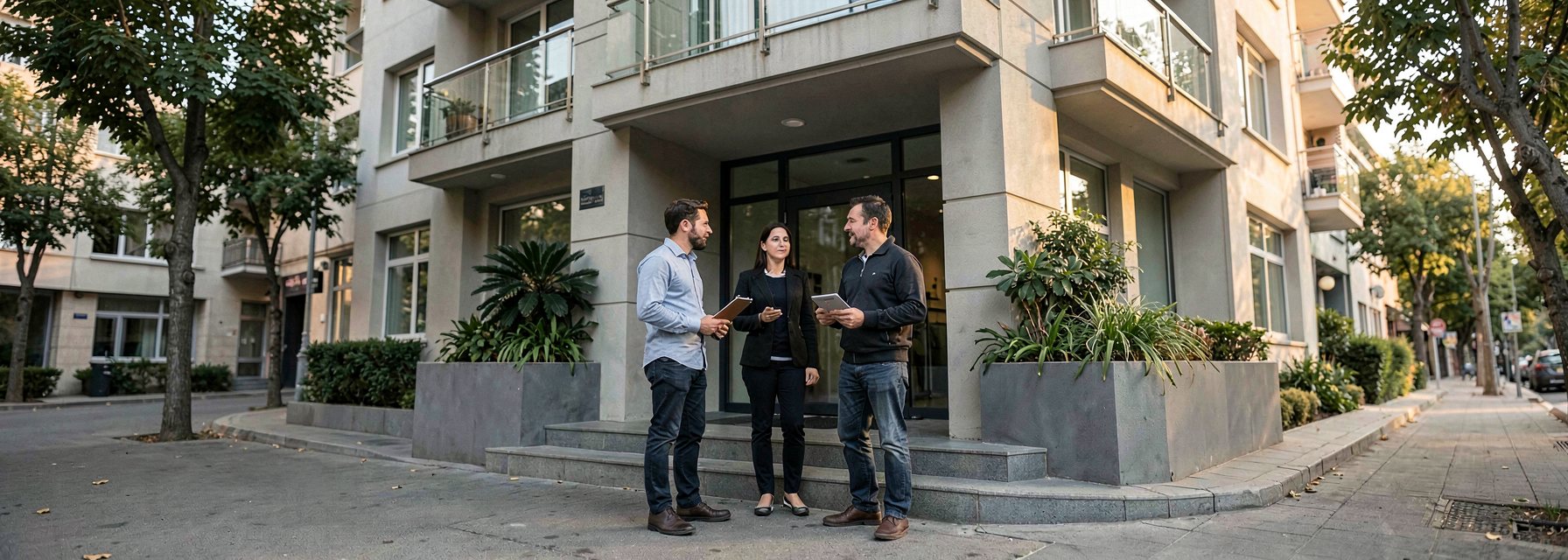
Foreign buyers of Turkish flats tend to think of the purchase as a title-deed transaction and of the building as a service they pay for. Turkish law sees it differently. From the moment the unit is registered in your name you are a member of a compulsory association of owners governed by the Condominium Law No. 634 (Kat Mülkiyeti Kanunu, "KMK"), with a vote, a share of every common expense, a duty to comply with a management plan you may never have read, and exposure to remedies that run from a monthly penalty to, in the extreme case, the forced sale of the flat to your neighbours.
This guide follows the text of the Law as in force in September 2026, including the amendments made by Law No. 7579 on 7 May 2026, which changed the rules on operating budgets and on management plans in multi-building complexes. It covers the sharing of expenses and the late-payment penalty, the owners' assembly and its majorities, the manager and the budget, the annulment of decisions and the judge's intervention, and the forced-transfer action, and it closes with a checklist for an owner who lives abroad.
1. What a Flat Owner Owes the Building: Article 18 and the Management Plan
Article 18 of Law 634 states the basic duty: each owner, in using the independent unit, its annexes and the common areas, must comply with the rules of good faith, must not disturb the others or infringe their rights, and must comply with the management plan. The same Article extends the owners' obligations to tenants, holders of a right of habitation and anyone else who continuously uses a unit, and makes them jointly and severally liable with the owner. A foreign owner who lets the flat therefore remains liable for a tenant's breaches; the building may pursue either.
The management plan (yönetim planı) is the building's constitution. Under Article 28 it regulates the manner of management, the purpose and manner of use, the remuneration of the manager and auditors and other matters of management; it has the force of a contract binding all owners, and it binds their universal and singular successors, which means it bound you the day the title deed was registered in your name, whether or not you were shown it. Where the plan is silent, the Law and the general rules apply. Amending the plan requires the votes of four-fifths of all owners (Article 28), a threshold that protects minorities but also entrenches old provisions; the Article preserves the right to apply to the court under Article 33. In multi-building complexes (toplu yapı) the May 2026 amendment lowered the threshold for changing the site-wide plan to two-thirds of the units represented in the representatives' council (Article 70, as amended by Law 7579).
Ask for the management plan before you buy, and read it in translation afterwards: it decides who pays for what, how meetings are called, whether short-term letting is restricted and what the manager may charge. The land registry keeps the plan and its amendments among the founding documents of the condominium (Article 28, final paragraph).
2. Service Charges: How Costs Are Shared, and the 5% Monthly Late Penalty (Article 20)
Unless the owners agree otherwise, Article 20 divides the common expenses in two ways. The wages of the doorkeeper, heating attendant, gardener and watchman, and the advances collected for them, are shared equally per unit. Building insurance premiums, the maintenance, protection, reinforcement and repair of all common areas, the manager's salary and other expenses, the running costs of common installations and the advances for them are shared in proportion to each owner's land share (arsa payı). No owner may refuse to pay by renouncing the use of a common area or installation, or by arguing that the position of the unit makes the facility useless to them (Article 20(c)); the owner of a ground-floor flat pays for the lift.
An owner who does not pay may be sued or subjected to enforcement proceedings by any other owner or by the manager, under the management plan, the Law and the general rules, and owes a late-payment compensation of five per cent per month for the days of delay (Article 20, second paragraph). That rate is not interest that a court may moderate under the general law; it is a statutory compensation, and over a year of arrears it exceeds the principal. Where an expense was caused by the fault of an owner or of a person using the unit, the others who paid have a right of recourse against that owner (Article 20, third paragraph).
The enforcement side is quick. Under Article 37 a finalised operating budget, or a resolution of the owners' assembly on operating expenses, counts as one of the documents listed in Article 68(1) of the Enforcement and Bankruptcy Law, which allows the manager to obtain the lifting of the debtor's objection in the enforcement court without a full trial. The manager may also have the statutory mortgage over the unit registered in the condominium register for unpaid contributions (Article 35(i)). For an owner abroad, arrears rarely stay small: they attract the monthly compensation, then enforcement, then, in the extreme case described in section 6, a claim to transfer the unit itself.
3. The Owners' Assembly: When It Meets, Who May Vote, and How Decisions Bind (Articles 29-32)
The owners' assembly (kat malikleri kurulu) meets at least once a year at the time fixed in the management plan or, if none is fixed, within the first month of the calendar year; in multi-building complexes the councils meet at least every two years (Article 29). An extraordinary meeting may be called at any time for an important reason, on the request of the manager, the auditor or one-third of the owners, by a notice signed for by all owners or sent by registered letter at least fifteen days before the date, stating the reason. The first notice must also state where and when the second meeting will be held if the first lacks a quorum, and at least seven days must separate the two.
The quorum is a majority of the owners by both number and land share, and decisions are taken by majority vote (Article 30). If the first meeting fails for want of a quorum, the second is held within fifteen days at the latest, and there the decision quorum is the absolute majority of those present; the special majorities elsewhere in the Law are preserved. That second-meeting rule is why an absent owner can find that a handful of neighbours have voted a levy. Each owner has one vote regardless of land share; an owner of several units has one vote per unit, capped at one-third of all votes; co-owners of a unit vote through one of them; an owner directly concerned by a decision may attend but not vote (Article 31). Proxies are permitted, but one person may not cast more than five per cent of the votes by proxy, except that in buildings of forty units or fewer a person may represent up to two owners (Article 31, final paragraph).
Certain matters need more than a majority. Changes to common areas, construction, installations or a different colour of external paint need the written consent of four-fifths of all owners, except urgent repairs or reinforcement that a court has found necessary (Article 19). Useful innovations that make the common areas more convenient or increase their benefit are decided by a majority by number and land share, with the costs borne by those who benefit (Article 42). Adding a floor, converting a set-back floor or building on the plot, letting the roof or outer walls for advertising, encumbering the property or dividing the land require unanimity (Articles 44 and 45). Opening a cinema, café, restaurant, workshop, shop or similar business in a unit registered as a dwelling likewise requires a unanimous resolution, and a hospital, clinic or laboratory may not be opened at all (Article 24).
4. The Manager and the Operating Budget: Articles 34-37 After the May 2026 Amendment
A building with eight or more units must have a manager (yönetici), appointed by the majority of owners by both number and land share, for one year at a time and re-appointable (Article 34). If the owners cannot agree, any owner may ask the civil court of peace of the place where the building stands to appoint one; a court-appointed manager cannot be replaced by the assembly for six months. The manager's name and address must be posted in a frame at the entrance, on pain of an administrative fine.
The manager's duties, unless the management plan provides otherwise, are listed in Article 35: implementing the assembly's decisions; taking the measures needed to use, protect, maintain and repair the building; insuring it; collecting the advances for management, protection, repair, cleaning, lifts, heating and insurance; making and receiving the building's payments; accepting service of documents addressed to the building; taking steps to avoid the loss of a right or the running of a time limit; bringing actions and enforcement proceedings against defaulting owners and registering the statutory mortgage; keeping the building's money in a bank account opened in the manager's name but marked as the building's; convening the assembly; and, since 2015, arranging the monthly maintenance and annual inspection of the lifts. Where a building that should have a manager has none, the owners are jointly responsible for those tasks. The manager must record the assembly's decisions, notices and all expenses in the register kept under Article 32, keep the vouchers, and have the register closed by a notary within one month after each calendar year (Article 36).
The operating budget (işletme projesi) changed on 22 May 2026. Under Article 37 as amended by Law No. 7579, the budget is approved by the owners' assembly; where no approved budget exists, the manager must prepare a provisional one without delay, to be approved by the assembly within three months at the latest. It shows the estimated annual income and expenses, each owner's estimated share under Article 20, and the advance each owner must pay. It is notified to the owners or to the actual users of the units against signature or by registered letter, and a resolution to accept it, as it stands or with changes, must be taken in the general assembly within three months. The amendment also capped the provisional budget: where an existing budget is in force, the provisional figure may not exceed the previous year's budget increased by the revaluation rate published under the Tax Procedure Law, with effect from the start of the calendar year. Finalised budgets and assembly decisions on operating expenses are, as noted above, documents that support direct enforcement.
5. Challenging a Decision and Asking the Judge to Intervene (Article 33)
An owner who attended the meeting and voted against a decision may bring an action to annul it before the civil court of peace of the place where the building stands within one month of the date of the decision; an owner who did not attend may do so within one month of learning of the decision and in any event within six months of its date (Article 33, first paragraph). Where a decision is non-existent or absolutely void, there is no time limit. The same paragraph gives every owner harmed by another owner's, tenant's or other user's failure to perform their obligations the right to apply to the court of peace for the judge's intervention.
The judge hears those concerned and decides at once, according to the Law and the management plan or, failing those, the general rules and equity, and fixes a short period within which the order must be complied with (Article 33, second paragraph). A person who does not comply within that period is fined by the same court, and the third paragraph preserves Article 25. The procedure is deliberately summary; the court of peace is the forum for the ordinary building dispute, from a balcony enclosure to a refusal to pay, and a foreign owner acts in it through a lawyer holding a power of attorney.
Two practical consequences follow for an owner who lives abroad. First, the one-month period for an owner who attended runs from the decision itself; sending a proxy who votes in favour, or who abstains rather than voting against, forfeits the challenge, because the right belongs to the owner who voted against under Article 32. Second, the six-month outer limit for absent owners runs regardless of when the minutes reached you; an owner who is not represented and does not read the building's correspondence can lose the right to challenge a levy before knowing it exists.
6. The Intolerable Owner: Forced Transfer of the Unit Under Article 25
The Law's heaviest remedy is aimed at an owner who, by failing to perform the duties the Law imposes, violates the rights of the others to a degree that has become intolerable for them. Under Article 25 the other owners may then ask the judge to order the transfer of that owner's unit to them. The action requires a prior resolution of the other owners by majority of number and land share, unless the management plan provides otherwise; owners who decline to join may be left out, and before judgment the court sets a period within which the claimants must deposit the transfer price, fixed at the unit's value nearest the date of judgment, in a bank account. If the claim succeeds, the unit passes to the claimants in proportion to their land shares and the price is paid to the defendant with accrued interest.
Article 25 lists three cases in which intolerability is presumed: where an owner's failure to pay common expenses and advances has led to three enforcement or court proceedings within two calendar years; where an owner has persisted for a year in violating the others' rights despite an order of the court of peace under Article 33; and where the unit is used as a brothel, a gambling den or a similar place contrary to morals. The right of action lapses if not used within six months of learning of the owners' resolution to sue, and in any event within five years of its accrual, or if the cause has ceased.
For an absent foreign owner the first presumption is the one that matters. Three enforcement files in two years is not an exotic scenario for a flat whose owner has stopped reading Turkish correspondence; it is the ordinary result of two years of unpaid dues. The defence is not complicated, but it must be mounted: pay, or contest the amount, before the third file is opened.
7. The Regime at a Glance
| Question | Provision | Rule |
|---|---|---|
| Sharing of common expenses | Art. 20 | Staff wages and their advances equally; insurance, maintenance, repair, reinforcement, manager's salary and running costs by land share; no opt-out for non-use |
| Late payment | Art. 20 | Five per cent per month statutory compensation; action or enforcement by any owner or the manager; recourse against the owner at fault |
| Management plan | Art. 28 | Contract binding all owners and their successors; amendment by four-fifths of all owners; multi-building site plan by two-thirds since May 2026 (Art. 70) |
| Ordinary meeting | Art. 29 | At least yearly, first month of the year unless the plan says otherwise; extraordinary meeting on 15 days' notice at the request of the manager, auditor or one-third of owners |
| Quorum and majority | Arts. 30-31 | Majority by number and land share; second meeting within 15 days decides by absolute majority of those present; one vote per unit, one-third cap, 5% proxy cap |
| Works on common areas | Arts. 19, 42 | Construction, installations, external colour: written consent of four-fifths; useful innovations: majority by number and land share, costs on those who benefit |
| Unanimity | Arts. 24, 44, 45 | Business use of a dwelling unit; adding floors or building on the plot; letting roof or walls for advertising; encumbering or dividing the land |
| Manager | Arts. 34-36 | Compulsory from eight units; majority by number and land share; court appointment on deadlock; duties in Art. 35; register closed by a notary yearly |
| Operating budget | Art. 37 (Law 7579, 2026) | Approved by the assembly; provisional budget by the manager, approval within three months; increase capped at the revaluation rate; finalised budget supports enforcement (EBL 68/1) |
| Challenging a decision | Art. 33 | Annulment before the court of peace: one month from the decision (voted against) or from learning of it (absent), six months at most; judge's intervention against defaulting owners and users |
| Forced transfer | Art. 25 | Intolerable owner; presumed after three enforcement or court files in two years for unpaid dues, one year of defiance of a court order, or immoral use; six-month and five-year limits |
8. What a Foreign Owner Should Do
Before buying. Obtain the management plan and the last two years of assembly minutes and budgets from the seller or the manager; check the number of units (a manager is compulsory from eight), the land share allocated to the unit, the arrears position of the seller, and any restriction in the plan on letting or on use. The plan binds successors under Article 28; a clause you dislike will be yours to live with unless four-fifths of the owners agree to change it.
While owning. Give the manager a service address and an e-mail, and appoint a representative in Turkey who can attend meetings and vote against decisions you object to, so that the one-month period in Article 33 is available. Pay the advances fixed by the approved budget on time; the five per cent monthly compensation in Article 20 is the most expensive money in Turkish private law. Keep the receipts, because the manager's register and the notary closure under Article 36 are the building's evidence, not yours.
When a dispute arises. Identify the instrument first: is it a decision of the assembly, an act of the manager or the conduct of a neighbour? Decisions are annulled under Article 33 within one month or six months; the manager's acts and a neighbour's conduct are corrected by the judge's intervention under the same Article; a levy for works that needed four-fifths written consent under Article 19 is open to challenge on that ground. Where you are the defaulting party, treat the second enforcement file as the alarm, because the third triggers the presumption in Article 25.
The Condominium Law is not hostile to the absent owner, but it assumes an owner who reads the post, attends or is represented at the meeting, and pays the advances when the budget says so. A foreign owner who does those three things through a representative in Turkey will find the building's disputes small and the remedies quick; one who does not will meet the Law at its harshest, in the enforcement court and, eventually, in Article 25.
- Get the management plan and the last two years of minutes and budgets; it binds you as a successor (KMK 28).
- Give the manager a service address and appoint a representative who can attend and vote against (KMK 31, 33).
- Pay the approved advances on time; arrears attract five per cent per month and direct enforcement (KMK 20, 37).
- Challenge a defective decision within one month, or six months if you were absent (KMK 33); check whether four-fifths or unanimity was needed (KMK 19, 24, 44, 45).
- Treat a second enforcement file as the alarm; the third in two years triggers the forced-transfer presumption (KMK 25).
Frequently Asked Questions
Do I have to pay for a lift or a garden I never use?
Yes. Article 20(c) of Law 634 provides that an owner may not refuse to pay their share of expenses and advances by renouncing the use of a common area or installation, or by arguing that the position of their unit makes it unnecessary. The only variation is by agreement among the owners, which in practice means the management plan.
How much is the penalty for paying the service charge late?
Article 20 imposes a late-payment compensation of five per cent per month, calculated for the days of delay, on an owner who has not paid the whole of their share of expenses or advances. It is a statutory sum, not contractual interest, and it accrues alongside enforcement costs once proceedings are started.
Can decisions be taken without me if I live abroad?
Yes. The assembly is validly constituted by a majority of owners by number and land share, and if the first meeting fails for want of a quorum the second meeting, held within fifteen days, decides by the absolute majority of those present (Article 30). You may vote through a proxy, subject to the five per cent cap on proxy votes in Article 31, and you may challenge a decision under Article 33 within one month of learning of it and six months of its date.
Can the building stop me from letting my flat short-term?
The management plan may regulate the manner of use and binds you as a successor (Article 28), and a neighbour harmed by a use contrary to the plan or to the duty in Article 18 may seek the judge's intervention under Article 33. Separate short-term rental permit rules under Law No. 7464 apply in addition to the condominium regime; check both before advertising the flat.
What is the new rule on budgets in 2026?
Law No. 7579, in force from 22 May 2026, amended Article 37: the operating budget must be approved by the owners' assembly; where none is approved the manager prepares a provisional budget for approval within three months; and a provisional budget may not exceed the previous year's budget increased by the revaluation rate published under the Tax Procedure Law. Multi-building complexes may now amend the site-wide management plan by two-thirds instead of four-fifths (Article 70).
Can I really lose my flat for not paying the dues?
Article 25 allows the other owners, acting by majority resolution, to ask the court to transfer the unit of an owner whose conduct has become intolerable, and intolerability is presumed where unpaid expenses have led to three enforcement or court proceedings within two calendar years. The transfer is against payment of the unit's value at the date of judgment, and the action must be brought within six months of the resolution to sue and five years of the cause arising. It is rare, but it is the statutory end-point of unpaid dues.
Which court hears condominium disputes, and can I act from abroad?
The civil court of peace (sulh hukuk mahkemesi) of the place where the building stands hears actions to annul assembly decisions, applications for the judge's intervention and the appointment of a manager (Articles 33 and 34). A foreign owner acts through a lawyer holding a notarised, apostilled power of attorney; attendance in person is not required.