
New-Build Property
Defective Construction in Türkiye: The Contractor's Liability for Building Defects Under the Work Contract, Inspection and Notice, the Owner's Options and the Time Bar in TBK 474 to 478
When a contractor builds a home that turns out to have cracks, leaks or other defects, the owner's rights in Türkiye come from the work contract (eser sözleşmesi) provisions of the Turkish Code of Obligations. Those provisions require the owner to inspect the building after handover and to notify defects, give the owner a choice, subject to conditions, between withdrawal, a price reduction and repair, keep a claim for damages open, and set a time bar that runs from delivery. This guide follows Articles 470 to 478 of the Code in order, adds the steps for preserving evidence, and gives a short pointer for buyers who bought a finished flat from a developer under a sale contract.
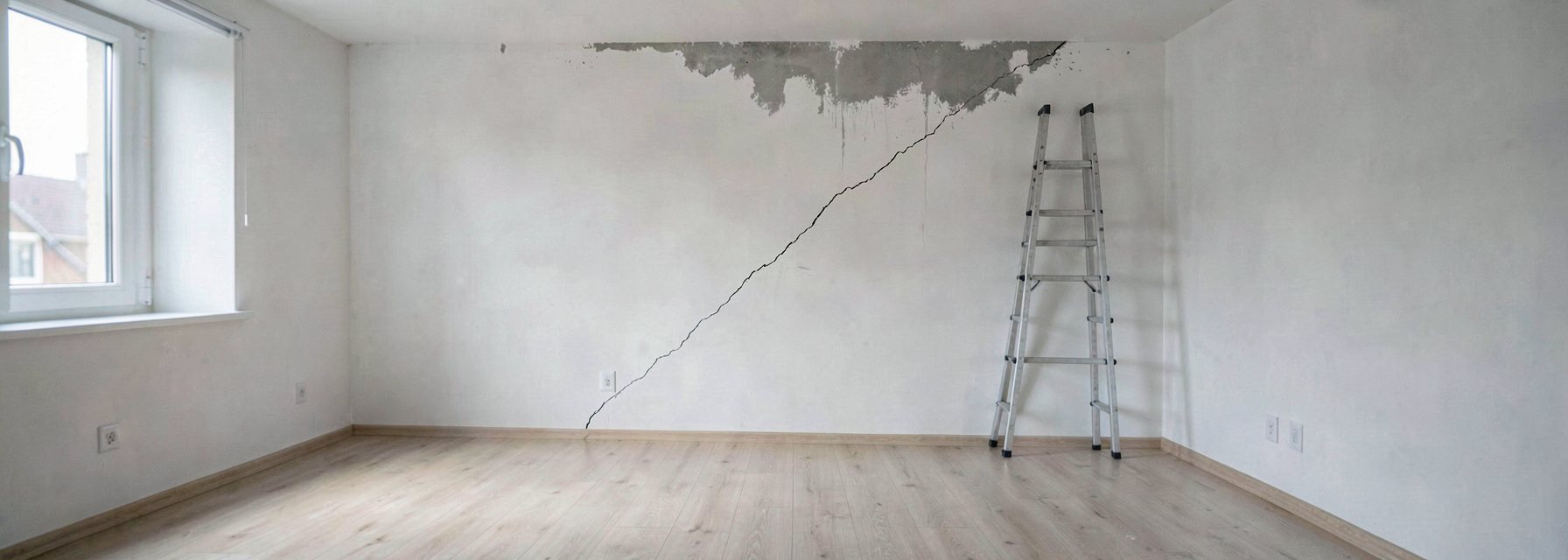
Who is liable for defects in a newly built home in Türkiye? Where the home was built under a work contract, the contractor is: Article 475 of the Turkish Code of Obligations lets the owner choose between withdrawal, a price reduction and repair at the contractor's expense, each subject to the conditions in that article, and reserves a claim for damages. The owner must inspect the building after delivery and notify defects within a reasonable period (Article 474), and lawsuits for a defective building are time-barred five years from delivery, or twenty years where the contractor is grossly at fault (Article 478).
This guide is written for foreign nationals who commissioned a house or villa from a contractor in Türkiye, for owners who had a building completed on their own land, and for buyers of new-build flats who want to know whether the contractor rules or the sale rules apply to them. It covers who is liable, the inspection and notice duties, the owner's options, how rights are lost, the time bar, defects seen during construction, and the separate route for a flat bought from a developer. It follows the text of the statutes cited and does not describe court practice.
1. Who Is Liable When a Contractor Builds a Defective Home?
The contractor is, under the work contract. Article 470 of the Turkish Code of Obligations No. 6098 (Türk Borçlar Kanunu, TBK) defines the work contract as a contract in which the contractor (yüklenici) undertakes to produce a work and the owner (işsahibi) undertakes to pay a price in return. A house, a villa or an apartment block built to order for a price is a work in this sense, and the provisions on liability for defects in Articles 474 to 478 apply to it.
The standard the contractor must meet is set by Article 471. Under Article 471(1), the contractor must perform its obligations faithfully and with care, taking into account the owner's legitimate interests. Article 471(2) adds that, in assessing liability arising from the duty of care, the conduct expected of a prudent contractor undertaking similar work, in line with professional and technical rules, is taken as the basis. Article 471(3) requires the contractor to produce the work itself or have it produced under its own management, unless its personal qualities are not important to the work, in which case it may have someone else do it.
Materials have their own rule. Article 472(1) provides that where the contractor supplied the materials, it is liable to the owner for defects in those materials in the same way as a seller. Where the owner supplied the materials, Article 472(2) requires the contractor to use them with due care and to account for them and return what is left over.
- A warning duty on the contractor. Article 472(3) provides that if, while the work is being produced, the materials supplied by the owner or the land the owner designated for the work turn out to be defective, or another circumstance arises that endangers proper or timely completion, the contractor must notify the owner immediately; if it does not, it is responsible for the consequences.
- Defects caused by the owner. Article 476 provides that if the defect results from the owner's instructions despite the contractor's express warning, or can be attributed to the owner for any other reason, the owner cannot exercise the rights arising from the defect.
- Who the owner is. The owner is the party that signed the work contract with the contractor. A buyer who purchased a finished flat from a developer is in a different position, explained in section 7.
2. What Must the Owner Do After Handover?
Inspect the building and report the defects to the contractor. Article 474(1) TBK provides that after delivery of the work, the owner must examine it as soon as it is possible in the ordinary course of business and, if there are defects, notify the contractor of them within a reasonable period (uygun bir süre içinde). The Code does not express the reasonable period in days; whether a notice was given in time is assessed on the facts.
Article 474(2) gives both sides a way to fix the condition of the building in a report: each party may, bearing the cost, ask for the work to be examined by a bilirkişi (a technical examiner) and for the result to be recorded in a report. The provision does not limit this to the owner; a contractor that disputes the defects can use it too.
Separately, the Code of Civil Procedure No. 6100 (Hukuk Muhakemeleri Kanunu, HMK) provides for evidence determination (delil tespiti). Under Article 400(1), each party may ask, for the purpose of establishing a fact it will rely on in a lawsuit it will file later, for steps such as an on-site inspection, a technical examination or the hearing of witnesses; the same paragraph also covers a pending lawsuit in which that stage has not yet been reached. Article 400(2) requires a legal interest and, outside the cases the law expressly provides for, treats it as present where it is possible that the evidence will be lost, or that relying on it will become significantly harder, if it is not established immediately. Under Article 401(1), before a lawsuit is filed the request is made to the court that will hear the main case or to the civil court of peace (sulh mahkemesi) of the place where the property to be inspected is located.
- Photograph and date each defect as it is found: the crack, the damp patch, the leak, the uneven floor.
- Send a written notice to the contractor listing the defects, keeping proof of the date of dispatch and receipt (Article 474(1)).
- Fix the technical picture through a report under Article 474(2) or an evidence determination under Articles 400 and 401 HMK, before repairs or further damage change the condition of the building.
- Keep notifying. If new defects appear later, notify them without delay (Article 477(3), section 4).
A foreign owner who lives abroad can take these steps through a representative in Türkiye. What matters under Article 474 is that the inspection and the notice are made, and the date on which they were made can be shown.
3. What Can the Owner Ask For: Withdrawal, Price Reduction, Repair or Damages?
Article 475(1) TBK provides that where the contractor is liable for a defect in the work, the owner may exercise one of the following optional rights (seçimlik haklar). The three rights are alternatives: the owner may exercise one of them, and withdrawal and repair are each available on the condition written into their own paragraph.
- Withdrawal from the contract (475(1)(1)). Available where the work is defective, or contrary to the terms of the contract, to such an extent that the owner cannot use it or cannot fairly be compelled to accept it.
- Price reduction (475(1)(2)). The owner keeps the work and asks for a reduction of the price in proportion to the defect.
- Repair (475(1)(3)). The owner asks for the work to be repaired without charge, with all costs borne by the contractor, provided that this does not require excessive cost.
- Damages (475(2)). The owner's right to claim compensation under the general provisions is reserved (saklıdır). The general provision is Article 112: where an obligation is not performed at all or not performed properly, the debtor must compensate the creditor for the resulting loss unless it proves that no fault is attributable to it.
For a building, the last paragraph of Article 475 matters. Article 475(3) provides that if the work was built on the owner's immovable and its removal would cause excessive harm, the owner cannot use the right to withdraw from the contract. A house built on the owner's own plot falls within the words of this paragraph; whether removal would cause excessive harm is assessed on the facts. Where withdrawal is excluded, the owner's remaining options under Article 475(1) are a price reduction or repair, with the damages claim reserved by Article 475(2).
Repair under Article 475(1)(3) carries its own limit: it is available where it does not require excessive cost. Whether a given repair is excessive in cost, and how a price reduction in proportion to the defect is calculated, are questions for the court, which can rely on a technical report. Our guide to contractor delay covers a different breach, delay in completion, and penalty clauses agreed for it in building contracts.
4. When Does the Owner Lose the Rights? Acceptance and Hidden Defects
Through express or implied acceptance of the work, which includes the acceptance the Code deems to have taken place when the owner fails to inspect and notify. Article 477(1) TBK provides that after the express or implied acceptance of the work, the contractor is released from all liability; however, its liability continues for defects that it intentionally concealed and that could not be noticed during a proper inspection (kasten gizlenen ve usulüne göre gözden geçirme sırasında fark edilemeyecek olan ayıplar).
Article 477(2) ties acceptance to the duty in Article 474: if the owner neglects the inspection and the notice, the work is deemed accepted. Article 477(3) covers defects that come to light later: if a defect in the work appears afterwards, the owner must notify the contractor without delay (gecikmeksizin); if the owner does not, the work is deemed accepted. The Code does not put a number of days on 'without delay'.
For a building these rules have a practical consequence. Some defects are visible at handover: a missing fitting, a cracked tile, a door that does not close. Others appear later: a crack that opens after the first winter, damp that shows after heavy rain, a leak from a concealed pipe. The paragraphs of Article 477 attach different conditions to each situation, and how they apply to a given defect is assessed on the facts. A dated notice for every defect, sent as soon as it is noticed, is the step the text of Articles 474 and 477 points to.
- Express acceptance. Article 477(1) speaks of express or implied acceptance; whether a signed handover protocol amounts to acceptance is assessed on its wording. Listing the visible defects in the protocol, or sending a separate notice, records that they were reported.
- Deemed acceptance. Under Article 477(2), an owner who neglects the inspection and the notice is deemed to have accepted the work; under Article 477(3), so is an owner who does not notify a defect that appears later without delay.
- Intentionally concealed defects. The contractor's liability continues for defects it intentionally concealed that a proper inspection could not reveal (Article 477(1)).
5. How Long Does the Owner Have to Sue the Contractor?
For a building, five years from delivery, or twenty years where the contractor is grossly at fault. Article 478 TBK provides that if the contractor has produced a defective work, lawsuits brought on that ground are time-barred (zamanaşımına uğrar) on the expiry, counted from the date of delivery, of two years for works other than immovable structures; of five years for immovable structures; and, if the contractor is grossly at fault (ağır kusur), of twenty years regardless of the nature of the defective work.
Three features of the text are worth reading closely. First, the verb is zamanaşımına uğrar: the periods are periods of limitation (zamanaşımı), not periods that extinguish the right (hak düşürücü süre). Second, the starting point is the date of delivery (teslim tarihi), not the date on which the defect was discovered. Third, the twenty-year period depends on the contractor's gross fault; Article 478 uses the words ağır kusur and does not mention fraud.
The time bar and the duty to notify are different things. Article 478 counts years for bringing a lawsuit; Articles 474 and 477 require inspection and notice within a reasonable period or without delay. An owner who is within the five years can still lose the rights for a defect if the work is deemed accepted under Article 477. An owner who notified in time still has to bring the claim within the period in Article 478.
6. Defects Seen While the Building Is Still Going Up
The owner does not have to wait for handover if it is already clear that the building will be defective. Article 473(2) TBK provides that if, while the work is being produced, it is clearly seen that the work will be defective or contrary to the contract through the contractor's fault, the owner may give the contractor an appropriate period to remedy the defect or the breach, with a warning that otherwise the repair or the continuation of the work will be given to a third party at the contractor's risk and expense.
Article 473(1) deals with delay. If the contractor does not start the work on time, delays it contrary to the contract, or is delayed for a reason not attributable to the owner, and it is clearly understood by all estimates that the contractor will not be able to finish the work at the agreed time, the owner may withdraw from the contract without having to wait for the delivery date. Delay penalties and damages for late completion are covered in our guide to contractor delay.
A warning under Article 473(2) is easier to support with evidence of the work's condition at the time: photographs, a site report and, where needed, an evidence determination under Article 400 HMK. The period given must be appropriate, and the Code does not express it in days.
7. Bought a Finished Flat From a Developer? The Sale-Contract Route
A buyer who bought a completed flat from a developer under a sale contract did not commission the work; the buyer bought the property. Where the contract is a sale, the rules on defects in a sale come into play; how a given contract is characterised is for the court. Article 219 TBK makes the seller liable for qualities it declared that the property lacks and for material, legal or economic defects that remove or significantly reduce its value for its intended use or the benefits the buyer expects from it; under Article 219(2), the seller is liable even if it did not know of the defects. Article 246 provides that the rules on the sale of movables apply by analogy to the sale of immovables.
The steps resemble those for a work. Article 223(1) requires the buyer to examine the property as soon as possible in the ordinary course of business and to notify a defect within a reasonable period; under Article 223(2), a defect that an ordinary examination could not reveal and that is discovered later must be notified to the seller immediately, failing which the property is deemed accepted with that defect. Article 227(1) gives the buyer the choice between withdrawal (declaring readiness to return the property), a price reduction in proportion to the defect, repair without charge where it does not require excessive cost, and, where possible, replacement with a defect-free equivalent; Article 227(2) reserves the claim for damages under the general provisions. The same article lets the seller prevent the buyer from using these options by immediately supplying a defect-free equivalent and compensating the whole loss (Article 227(3)), and, where the buyer chooses withdrawal and the circumstances do not justify it, lets the judge order repair or a price reduction instead (Article 227(4)).
For buildings, Article 244(3) sets the time bar: lawsuits arising from a building being defective are time-barred on the expiry of five years from the passing of ownership, and of twenty years if the seller is grossly at fault. The starting point here is the passing of ownership, not delivery.
- Consumer law. The Consumer Protection Law No. 6502 (Tüketicinin Korunması Hakkında Kanun, TKHK) defines goods (mal) to include housing or holiday immovables (Article 3(1)(h)), and a consumer as a person acting for non-commercial and non-professional purposes (Article 3(1)(k)). Article 12(1) provides that liability for defective goods is subject to a limitation period of five years from the delivery of the immovable for housing or holiday immovables, unless a longer period is set by law or the contract, and Article 12(3) provides that if the defect was concealed through gross fault or fraud (ağır kusur ya da hile), the limitation provisions do not apply.
- The consumer's options. Article 11(1) TKHK lists withdrawal, price reduction, repair without charge where it does not require excessive cost, and replacement where possible, and provides that the seller must comply with the request the consumer chooses. Under Article 11(4), a repair or replacement request for housing or holiday immovables must be carried out within sixty working days of the request being directed to the seller, producer or importer; otherwise the consumer may turn to the other options. Article 11(6) allows damages under the Code of Obligations alongside the chosen option.
- Work contracts with consumers. Article 3(1)(l) TKHK defines a consumer transaction to include work (eser) contracts between a person acting for commercial or professional purposes and a consumer. Article 73(1) gives the consumer courts jurisdiction over disputes arising from consumer transactions, and Article 73/A makes an application to a mediator a condition for filing in the consumer courts, subject to listed exceptions that include disputes of a consumer-transaction nature arising from the immovable itself (taşınmazın aynından doğan). Whether a given contract is a consumer transaction, and whether an exception applies, is for the court.
Which route fits, the work contract, the sale contract or the consumer law, depends on what was signed, with whom, and for what purpose. Our guide to defective goods under Law No. 6502 sets out the consumer-law rules in more detail, and our guide to buying an off-plan apartment covers flats bought before they are built.
8. Work Contract, Sale Contract and Consumer Law Side by Side
The table sets the three routes next to each other. Each entry follows the text of the article cited and does not describe court practice.
| Point | Work contract (TBK 470-478) | Sale of a building (TBK 219-227, 244, 246) | Consumer sale of housing (TKHK 8-12) |
|---|---|---|---|
| Who is liable | The contractor that undertook to produce the work (TBK 470) | The seller, even if it did not know of the defect (TBK 219(2)) | The seller acting for commercial or professional purposes (TKHK 3(1)(i), 11) |
| Inspection and notice | Inspect after delivery as soon as possible; notify within a reasonable period (TBK 474(1)); later defects without delay (TBK 477(3)) | Examine as soon as possible; notify within a reasonable period; hidden defects immediately (TBK 223) | Defect defined at delivery (TKHK 8(1)); options under TKHK 11 |
| Options | Withdrawal, price reduction or repair (TBK 475(1)); withdrawal excluded where removal from the owner's land would cause excessive harm (475(3)) | Withdrawal, price reduction, repair or replacement (TBK 227(1)); the judge may order repair or a price reduction where withdrawal is not justified (227(4)) | Withdrawal, price reduction, repair or replacement; seller must comply with the choice (TKHK 11(1)) |
| Damages | Reserved under the general provisions (TBK 475(2), 112) | Reserved under the general provisions (TBK 227(2)) | May be claimed under the TBK alongside the option (TKHK 11(6)) |
| Time bar for a building | Five years from delivery; twenty years if the contractor is grossly at fault (TBK 478) | Five years from the passing of ownership; twenty years if the seller is grossly at fault (TBK 244(3)) | Five years from delivery of the immovable; not applied if concealed through gross fault or fraud (TKHK 12(1), (3)) |
9. Step by Step: From Handover to a Claim
The steps below follow the order in which the provisions come into play. They concern documents and dates the owner can prepare; they are not a description of court practice.
- Find the contract and check what was signed: a work contract with a contractor (TBK Art. 470) or a sale contract with a seller or developer (TBK Arts. 219 and 246).
- Note the date of delivery, and for a sale the date ownership passed: the time bars in Articles 478 and 244(3) run from these dates.
- Inspect the building as soon as possible after delivery and list every defect with dated photographs (TBK Art. 474(1)).
- Send the contractor a written notice of the defects within a reasonable period, and keep proof of dispatch and receipt (TBK Arts. 474(1) and 477(2)).
- Have the condition of the building recorded in a report (TBK Art. 474(2)) or through an evidence determination before repairs are made (HMK Arts. 400 and 401).
- Notify any defect that appears later without delay (TBK Art. 477(3)).
- Choose between withdrawal, price reduction and repair, and consider the damages claim reserved by Article 475(2); check whether Article 475(3) excludes withdrawal for a building on your own land.
- Bring the claim within the period in Article 478, or Article 244(3) or Article 12 of Law No. 6502 where the sale or consumer rules apply.
Each of these points is easier to handle with the documents in front of you: the contract, the handover protocol, the photographs, any technical report and every notice sent or received with its date. Our real estate law practice advises owners and buyers in English on building defects, and our real estate due diligence guide lists the checks to make before buying. You can reach us through the contact page.
Frequently Asked Questions
Who is responsible for cracks in a newly built house in Türkiye?
Where the house was built under a work contract, the contractor is liable for defects in the work under Articles 474 to 478 of the Code of Obligations, and Article 471 measures its care against a prudent contractor following professional and technical rules. Under Article 476, the owner cannot rely on a defect that results from the owner's own instructions despite the contractor's express warning or that is otherwise attributable to the owner. Whether a particular crack is a defect is a technical question the court assesses, which is why a report under Article 474(2) or an evidence determination under Article 400 of the Code of Civil Procedure matters.
How quickly must I notify the contractor of defects?
Article 474(1) of the Code of Obligations requires the owner to examine the work as soon as possible in the ordinary course of business after delivery and to notify defects within a reasonable period. Under Article 477(3), a defect that appears later must be notified without delay. The Code does not give a number of days for either; failing to inspect and notify, or failing to notify a later defect, means the work is deemed accepted under Article 477(2) and (3).
Can I cancel the contract because the building is defective?
Article 475(1)(1) allows withdrawal where the work is defective to such an extent that the owner cannot use it or cannot fairly be compelled to accept it. Article 475(3) excludes withdrawal where the work was built on the owner's immovable and its removal would cause excessive harm. In that case the owner can choose a price reduction in proportion to the defect or repair at the contractor's expense where it does not require excessive cost, and the right to claim damages under the general provisions remains reserved.
How long do I have to sue a contractor for defects in a building?
Article 478 of the Code of Obligations provides that lawsuits for a defective work are time-barred five years from the date of delivery for immovable structures, and twenty years from delivery if the contractor is grossly at fault, regardless of the nature of the defective work. The periods run from delivery, not from discovery. Separately, the work may be deemed accepted earlier if the inspection and notice duties in Articles 474 and 477 are not met.
I signed the handover protocol. Have I lost my rights?
Article 477(1) provides that after express or implied acceptance the contractor is released from all liability, except for defects it intentionally concealed that could not be noticed during a proper inspection. Article 477(3) requires a defect that appears later to be notified without delay. What the protocol says, which defects were visible at handover and when each was notified are the facts the court assesses, so the protocol, photographs and every notice sent should be kept together.
I bought a finished flat from a developer. Do the same rules apply?
Not necessarily. Where a completed flat was bought under a sale contract, the Code of Obligations applies the sale rules rather than the work-contract rules: the seller is liable for defects even if it did not know of them (Article 219(2)), and Article 244(3) sets a five-year time bar from the passing of ownership, twenty years if the seller is grossly at fault. Where the buyer is a consumer, Law No. 6502 provides a five-year limitation period from delivery for housing and disapplies the limitation provisions if the defect was concealed through gross fault or fraud (Article 12). Which rules apply depends on the contract and the parties.
Should I repair the defects myself before going to court?
Repairs change the condition of the building that a court or a bilirkişi would need to examine. Article 474(2) allows either party, at its own cost, to have the work examined by a bilirkişi and the result recorded in a report, and Articles 400 and 401 of the Code of Civil Procedure allow an evidence determination before a lawsuit where evidence may be lost or become significantly harder to rely on. Fixing the condition of the building first keeps the evidence for the claim under Article 475.