
Property Rights
Usufruct (İntifa Hakkı) Over Property in Türkiye: Creation by Registration, the Usufructuary's Rights and Duties, the Owner's Position and How the Right Ends Under TMK 794 to 825
A usufruct (intifa hakkı) lets one person use and enjoy a property that another person owns. In Türkiye it is set out in Articles 794 to 822 of the Turkish Civil Code, with the narrower right of habitation (oturma hakkı) in Articles 823 to 825. Over a house, a flat or a plot of land the right is created by registration in the land register, and the Code then divides the roles: the usufructuary possesses, manages and uses the property and bears its ordinary upkeep, while the owner keeps the right to supervise, to ask for security on proving that its rights are endangered and to get the property back when the usufruct ends. This guide follows those articles in order and sets the usufruct next to the right of habitation and an ordinary lease.
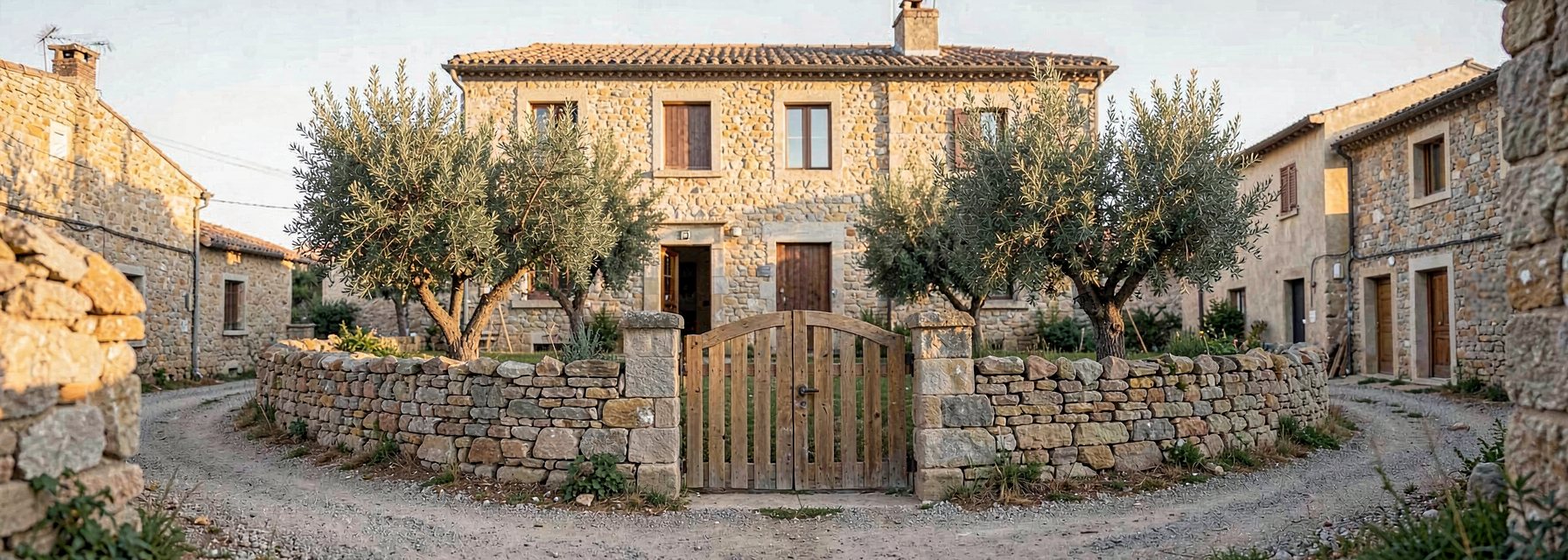
What is a usufruct over property in Türkiye? It is a right that, unless otherwise arranged, gives its holder full use and enjoyment of property owned by someone else (Article 794 of the Turkish Civil Code). Over a house, a flat or land it is created by registration in the land register (Article 795); for a natural person it ends on the holder's death (Article 797), and the holder must then return the property to the owner (Article 799).
This guide is written for foreign nationals who own, inherit or are offered a property in Türkiye that carries a usufruct: parents who transfer a house to their children and keep the usufruct, beneficiaries of a will, surviving spouses, and owners who want to grant someone the use of a home. It follows the text of the Turkish Civil Code and does not describe court practice or tax.
1. What Is a Usufruct (İntifa Hakkı) Under Turkish Law?
A usufruct is a right to use and enjoy property that belongs to someone else. The Turkish Civil Code No. 4721 (Türk Medeni Kanunu, TMK) places it in the chapter headed İntifa hakkı ve diğer irtifak hakları (usufruct and other servitudes). Article 794(1) TMK provides that a usufruct may be established over movables, immovables, rights or an estate (malvarlığı). Article 794(2) adds that, unless otherwise arranged, the right gives its holder full use and enjoyment of its object (tam yararlanma yetkisi).
Two parties are involved. The holder of the usufruct, the usufructuary (intifa hakkı sahibi), has the use and enjoyment; the owner (malik) remains the owner and receives the property back when the right ends (Article 799). The words unless otherwise arranged in Article 794(2) matter: the document that creates the usufruct can narrow what the holder may do, so the scope of a given usufruct is read from that document and from the land register entry.
The Code then sets out the content of the right in detail: the holder's powers (Articles 803 to 806), the owner's rights (Articles 807 to 810), the inventory (Article 811), the holder's duties (Articles 812 to 815), special rules for immovables (Articles 816 to 818), and the end of the right and the return of the property (Articles 796 to 802). The narrower right of habitation (Articles 823 to 825) is compared with the usufruct in section 8.
2. How Is a Usufruct Over a House or Land Created?
By registration in the land register. Article 795(1) TMK provides that a usufruct is established over movables by the transfer of possession, over receivables by assignment of the receivable, and over immovables by registration in the land register (tapu kütüğüne tescil). Article 1022(1) states the general principle for the register: real rights arise by registration in the register and take their rank and date from the registration.
Article 795(2) provides that unless otherwise arranged, the provisions on ownership apply to the acquisition and registration of a usufruct over movables and immovables. Under Article 1022(3), the content of a registered right is determined, within the limits of the registration, by the documents on which it is based or in any other way, so the deed or decision behind the entry is part of the picture.
Article 795(3) deals with a usufruct over an immovable that arises by law (yasal intifa hakkı): even if it has not been registered in the land register, it can be asserted against those who know of the situation; if it has been registered, it can be asserted against everyone.
- By agreement and registration. An owner can grant a usufruct to another person, or transfer the property and keep a usufruct for themselves; for an immovable the right comes into being with the registration (Articles 795(1) and 1022(1)). Article 809 refers to the second case, a gift made with the usufruct reserved to the donor.
- By a will. Article 517(2) provides that a specific legacy (belirli mal bırakma) may be directed at granting a usufruct over the whole or part of the estate. Our guide to making a will in Türkiye explains the forms of a will.
- For a surviving spouse. Article 652(2) provides that, where there are justified reasons, on the request of the surviving spouse or of one of the deceased's other statutory heirs, the court may grant a usufruct or a right of habitation instead of ownership; the ownership referred to is the one Article 652(1) lets the surviving spouse request over the home the spouses lived in and the household goods, set off against the inheritance share; under Article 652(3) the surviving spouse cannot use these rights over the parts a descendant needs to carry on the deceased's profession or trade, and the same article reserves the inheritance rules on agricultural immovables. Article 240(1) gives a surviving spouse under the participation in acquired property regime the right, so as to continue their former way of life, to ask for a usufruct or a right of habitation over the home that belonged to the deceased spouse and in which they lived together, set off against the participation claim and with a payment added if it does not suffice, with other arrangements in a marital property agreement reserved; Article 240(3) allows ownership of the home to be granted instead, where there are justified reasons, on the request of the surviving spouse or of the deceased spouse's statutory heirs, and Article 240(4) contains the same exclusion for professional premises.
- Over a co-owned share. Article 700 covers a co-owner who establishes a usufruct over their own share: if another co-owner asks for partition within three months of being notified, in a partition by sale the usufruct continues on the price that falls to that share. Our guide to partition of co-owned property covers the partition lawsuit.
Before relying on a usufruct, or before buying a property that may carry one, the land register entry and the document behind it are the starting point. Our real estate due diligence guide lists the register checks that apply to any purchase.
3. What Can the Usufructuary Do With the Property?
Possess, manage, use and enjoy it, with the care of a good manager. Article 803(1) TMK provides that the usufructuary has the powers to hold the property in their possession, to manage it, to use it and to enjoy it (zilyetliğinde bulundurma, yönetme, kullanma ve ondan yararlanma). Article 803(2) adds that the usufructuary must exercise these powers with the care of a good manager (iyi bir yönetici gibi özen).
The Code gives the usufructuary the fruits. Article 804(1) provides that natural fruits that ripen during the usufruct belong to the usufructuary. Under Article 804(2), whichever of the owner or the usufructuary sowed or planted may ask the other party, who gathers the ripened fruits, for appropriate compensation for its expenses, not exceeding the value of the produce. Article 804(3) keeps with the owner the component parts that are not, by their nature, natural yield or produce of the thing. Article 805 provides that interest and other periodic income from capital subject to a usufruct belong to the usufructuary from the date the usufruct begins to the date it ends, even if they fall due later.
The exercise of the right can be passed on. Article 806(1) provides that unless the contract provides otherwise or the circumstances show that the right must be exercised personally by its holder, the exercise of a usufruct may be transferred to another person. Under Article 806(2), the owner may then assert its rights directly against the transferee. The usufruct provisions do not contain a separate article on letting the property; whether and on what terms a usufructuary may let it to a tenant is read from Articles 803 and 806 and from the document creating the right, and a dispute about it is for the court to assess.
- Ordinary limits for land and buildings. Article 816(1) requires a usufructuary of an immovable to take care that the enjoyment stays within ordinary limits; under Article 816(2), produce obtained by exceeding that measure belongs to the owner.
- No change of economic purpose. Article 817(1) provides that the usufructuary cannot change the economic purpose of the immovable in a way that causes significant harm to the owner; in particular, it cannot transform it into a new form or make a significant change to it. For a house with an olive garden, this is the provision to read before any conversion or major alteration.
- Quarries. Article 817(2) allows the usufructuary to open stone, lime, marble and peat quarries and similar, on condition of notifying the owner in advance and not making a significant change to the economic purpose of the immovable.
- Forests. Article 818(1) provides that a person with a usufruct over a forest may enjoy it within an operating plan in line with the provisions of special legislation.
4. What Must the Usufructuary Maintain and Pay?
The ordinary upkeep and running costs of the property, and the items Article 813 lists, while other obligations remain with the owner. Article 812(1) TMK provides that the usufructuary must carry out the repairs and renewals necessary for the preservation and ordinary maintenance of the property. Where preservation calls for more significant works or measures, Article 812(2) requires the usufructuary to notify the owner and to allow them to be carried out; under Article 812(3), if the owner refuses to carry out the necessary works, the usufructuary may carry them out itself at the owner's expense.
Article 813(1) provides that the ordinary maintenance and operating costs of the property, the interest on debts for which it serves as security, and its taxes and charges (vergi ve resimleri) are borne by the usufructuary for the duration of the usufruct. Under Article 813(2), if the owner has paid the taxes and charges, the usufructuary must reimburse the owner on the same basis. Article 813(3) provides that all other obligations belong to the owner; but if the usufructuary, on the owner's request, does not provide the money needed to meet those obligations without consideration, the owner may convert the property, in part or in whole, into money to meet them. This guide does not analyse any tax; Article 813 is quoted for what its text says and nothing more.
Insurance has its own article. Article 815(1) provides that where good management according to local custom requires it, the usufructuary must insure the property against fire and other hazards in favour of the owner. Under Article 815(2), in that case, or where the usufruct was established over property that was already insured, the usufructuary must pay the insurance premiums for as long as the right lasts.
5. What Rights Does the Owner Keep During the Usufruct?
The owner can object to wrongful use, ask for security on proving that its rights are endangered, ask for an inventory and, in the end, get the property back. Article 807 TMK provides that the owner may object to a use of the property that is unlawful or not suited to its nature. Article 808(1) provides that an owner who proves that its rights are endangered may ask the usufructuary for security (güvence). Under Article 808(2), where the object is a consumable thing or securities, the owner may ask for security even before delivery without proving any danger; Article 808(3) treats depositing securities in a safe place as security.
Article 809 contains an exception that matters for family arrangements: in gifts made with the usufruct reserved to the donor, no security can be demanded from the donor. A parent who gives a house to a child and keeps the usufruct is a situation the text covers.
Article 810 sets the consequence of non-compliance: if the usufructuary does not provide security within the appropriate period given to it, or continues to use the property unlawfully despite the owner's objection, the judge of the civil court of peace (sulh hâkimi) removes the usufructuary's possession until a new decision and entrusts the property to a trustee (kayyım) it appoints.
- Inventory. Article 811 provides that the owner or the usufructuary may at any time ask the other for an official inventory of the property to be drawn up by a notary, with the costs shared. An inventory at the start makes the return easier to settle.
- Direct claim against a transferee. Where the exercise of the usufruct has been transferred, the owner may assert its rights directly against the transferee (Article 806(2)).
6. How Does a Usufruct End?
For a natural person, on the holder's death; expiry of an agreed term, waiver and the complete destruction of its object are also grounds of termination, and for an immovable the Code ties the end of the right to the deletion of the registration, which the owner may request. Article 797(1) TMK provides that a usufruct ends, for natural persons, on the death of the holder; for legal persons, on expiry of the agreed term or, if no term was agreed, when the legal person ceases to exist. Article 797(2) adds that a legal person's usufruct may last for no more than one hundred years (en çok yüz yıl).
Article 796 separates two kinds of ending. Under Article 796(1), a usufruct ends with the complete destruction of its object and, for immovables, with the deletion (terkin) of the registration; a usufruct arising by law ends when its cause ceases to exist. Under Article 796(2), other grounds of termination, such as expiry of the term, waiver by the holder or the holder's death, give the owner of an immovable the power to request deletion of the registration. The owner's step after one of those events is therefore the request for deletion.
Loss of the property and replacement value are covered by Article 798. Article 798(1) provides that the owner is not obliged to restore property that has been destroyed to the point where it cannot be enjoyed; if it does restore it, the usufruct is re-established. Article 798(2) provides that in cases such as insurance and expropriation, the usufruct continues on the compensation that takes the place of its object.
7. Returning the Property and Settling Accounts
When the usufruct ends, the property goes back to the owner. Article 799 TMK provides that when the usufruct ends, the holder must return the property to the owner.
Article 800 sets the usufructuary's liability at the return. Under Article 800(1), the usufructuary is liable for the destruction of the property or the reduction in its value, unless it proves that the damage did not result from its own fault. Article 800(2) requires the usufructuary to compensate for things it consumed although they were not necessary for its enjoyment. Article 800(3) provides that the usufructuary is not liable for reductions in value resulting from ordinary use of the property.
Expenses run the other way. Article 801(1) provides that the usufructuary may, when the right ends, claim compensation under the rules on agency without authority (vekâletsiz iş görme) for expenses, renewals and additions it made although not obliged to. Under Article 801(2), if the owner refuses compensation, the usufructuary may remove the additions it made, on condition of restoring the property to its former state.
- One-year limitation. Article 802 provides that all claims that the owner and the usufructuary may assert at the time of return are time-barred (zamanaşımına uğrar) on the expiry of one year from that moment. The verb is zamanaşımı, a period of limitation, and it runs from the return.
- Evidence of condition. Because liability under Article 800 turns on the reduction in value, its cause and ordinary use, a notarial inventory at the start (Article 811) and dated photographs at the return help both sides.
8. Usufruct, Right of Habitation and Lease Side by Side
The usufruct, the right of habitation and the lease can each give a person the use of a home, but they rest on different provisions. The table sets them next to each other, following the text of each article cited.
| Point | Usufruct (TMK 794-822) | Right of habitation (TMK 823-825) | Residential lease (TBK 299 ff.) |
|---|---|---|---|
| What it gives | Full use and enjoyment of the object unless otherwise arranged (TMK 794(2)) | The power to use a building or part of it as a home (TMK 823(1)) | Use, or use with enjoyment, of a thing in return for the agreed rent (TBK 299) |
| How it arises over an immovable | Registration in the land register (TMK 795(1)); real rights arise by registration (TMK 1022(1)) | Usufruct provisions apply unless the law provides otherwise (TMK 823(3)) | A contract; annotation of the lease in the land register may be agreed (TBK 312), and an annotated lease can be asserted against later right holders (TMK 1009(2)) |
| Passing it to others | The exercise may be transferred unless the contract or circumstances require personal exercise (TMK 806(1)) | Cannot be transferred to another person and does not pass to heirs (TMK 823(2)) | Residential and roofed business premises: no subletting or transfer of use without the landlord's written consent (TBK 322(2)) |
| Death of the holder | Ends on the death of a natural-person holder (TMK 797(1)) | Does not pass to heirs (TMK 823(2)) | The tenant's heirs may terminate for the nearest termination date, observing the statutory notice period (TBK 333) |
| Upkeep | Repairs and renewals for preservation and ordinary maintenance; ordinary maintenance and operating costs, interest on secured debts, taxes and charges (TMK 812(1), 813(1)) | Holder bears repair and renewal costs for preservation and ordinary maintenance where the right covers the whole building or the whole of a part; owner bears maintenance and repair costs where the holder uses it together with the owner (TMK 825) | Landlord keeps the premises fit for the agreed use (TBK 301); tenant pays cleaning and maintenance costs of ordinary use (TBK 317) |
| Change of owner | Registered as a real right with rank and date from registration (TMK 795(1), 1022(1)) | Usufruct provisions apply unless the law provides otherwise (TMK 823(3)) | If the property changes hands after the lease is made, the new owner becomes a party to it; expropriation rules reserved (TBK 310) |
The right of habitation deserves a closer look because it is offered in family settings. Article 824(1) provides that its scope is determined, in general, by the holder's personal needs. Under Article 824(2), unless it was expressly made personal to the holder, the holder may live in the building or part of it together with family and household members, and Article 824(3) allows the holder of a right over part of a building to use the areas set aside for common use. Article 825 then divides the costs: where the right covers the whole building or the whole of a part, the repair and renewal costs needed for its preservation and ordinary maintenance are borne by the holder; where the holder uses the building or part together with the owner, maintenance and repair costs are borne by the owner.
A lease is a contract between landlord and tenant, governed by the Turkish Code of Obligations No. 6098 (Türk Borçlar Kanunu, TBK), and it may sit alongside a usufruct: where a usufructuary signs a lease with a tenant, the lease is a contract between those two persons. Our guide to the right of way for landlocked land covers another servitude that can burden land, the right of way.
9. Step by Step: Granting, Holding or Ending a Usufruct
The steps below follow the order in which the provisions come into play. They concern documents and dates the parties can prepare; they are not a description of court practice.
- Obtain the land register record and the document behind the entry: the deed, the will or the court decision (TMK Arts. 795(1) and 1022(3)).
- Read what the document says about scope and personal exercise, since full enjoyment applies unless otherwise arranged (TMK Arts. 794(2) and 806(1)).
- Ask for a notarial inventory of the property at the start, with the costs shared (TMK Art. 811).
- Agree in writing who handles routine upkeep, operating costs, charges and insurance, measured against Articles 812, 813 and 815.
- Notify the owner before significant works and keep proof of the notice (TMK Art. 812(2)).
- Keep receipts for expenses, renewals and additions that go beyond the usufructuary's duties (TMK Art. 801).
- When the right ends, request deletion of the registration where Article 796(2) applies, return the property (TMK Art. 799), and record its condition.
- Bring any claim arising at the return within one year of the return (TMK Art. 802).
Each of these points is easier to handle with the documents in front of you: the land register record, the deed, will or decision that created the right, any inventory, receipts for works and every notice sent or received with its date. Our real estate law practice advises owners and usufructuaries in English, and you can reach us through the contact page.
Frequently Asked Questions
What is the difference between usufruct and ownership in Türkiye?
The owner (malik) keeps ownership; the usufructuary has the use and enjoyment. Article 794(2) of the Turkish Civil Code gives the usufructuary full use and enjoyment of the object unless otherwise arranged, and Article 803 lists the powers to possess, manage, use and enjoy it with the care of a good manager. When the usufruct ends, Article 799 requires the holder to return the property to the owner.
Does a usufruct over a flat or land have to be registered?
Yes. Article 795(1) provides that a usufruct over an immovable is established by registration in the land register, and Article 1022(1) states that real rights arise by registration and take their rank and date from it. A usufruct over an immovable arising by law is different: under Article 795(3) it can be asserted against those who know of the situation even if unregistered, and against everyone once registered.
Can the usufructuary rent the property out?
The usufruct articles do not contain a separate rule on letting. Article 803 gives the usufructuary the powers to possess, manage, use and enjoy the property, and Article 806 allows the exercise of the usufruct to be transferred unless the contract provides otherwise or the circumstances require personal exercise; the owner may then assert its rights directly against the transferee. Whether a particular letting is covered depends on those articles and on the document creating the right, and a dispute is for the court to assess.
Who pays for repairs, maintenance and charges on a property under usufruct?
Under Article 812(1), the usufructuary carries out the repairs and renewals needed for preservation and ordinary maintenance. Article 813(1) assigns to the usufructuary, for the duration of the usufruct, the ordinary maintenance and operating costs, the interest on debts the property secures, and its taxes and charges; other obligations belong to the owner under Article 813(3). More significant works must be notified to the owner and allowed under Article 812(2).
What happens when the usufructuary dies?
For a natural person, Article 797(1) provides that the usufruct ends on the holder's death. Under Article 796(2), the holder's death, like expiry of the term or waiver, gives the owner of an immovable the power to request deletion of the registration. Article 799 requires the property to be returned to the owner, and Article 802 provides that claims the owner and the usufructuary may assert at the time of return are time-barred one year from that moment.
I gave my house to my children and kept the usufruct. Can they ask me for security?
Article 809 of the Turkish Civil Code provides that in gifts made with the usufruct reserved to the donor, no security can be demanded from the donor. The general rule in Article 808(1), under which an owner who proves its rights are endangered may ask for security, therefore does not apply to that donor. The owner's right under Article 807 to object to unlawful use, or use not suited to the nature of the property, is a separate provision.
Is a right of habitation the same as a usufruct?
No. Article 823(1) gives the right of habitation the power to use a building or part of it as a home, and Article 823(2) provides that it cannot be transferred and does not pass to heirs. Under Article 824(2), unless the right was expressly made personal, the holder may live there with family and household members. Article 823(3) applies the usufruct provisions to it unless the law provides otherwise, and Article 825 sets its own rule on maintenance costs.