
Real Estate & Property
Earthquake Safety When Buying Property in Turkey 2026
Buying property in Turkey? Learn the earthquake building-safety laws, permits, and due diligence every foreign buyer must check in 2026.
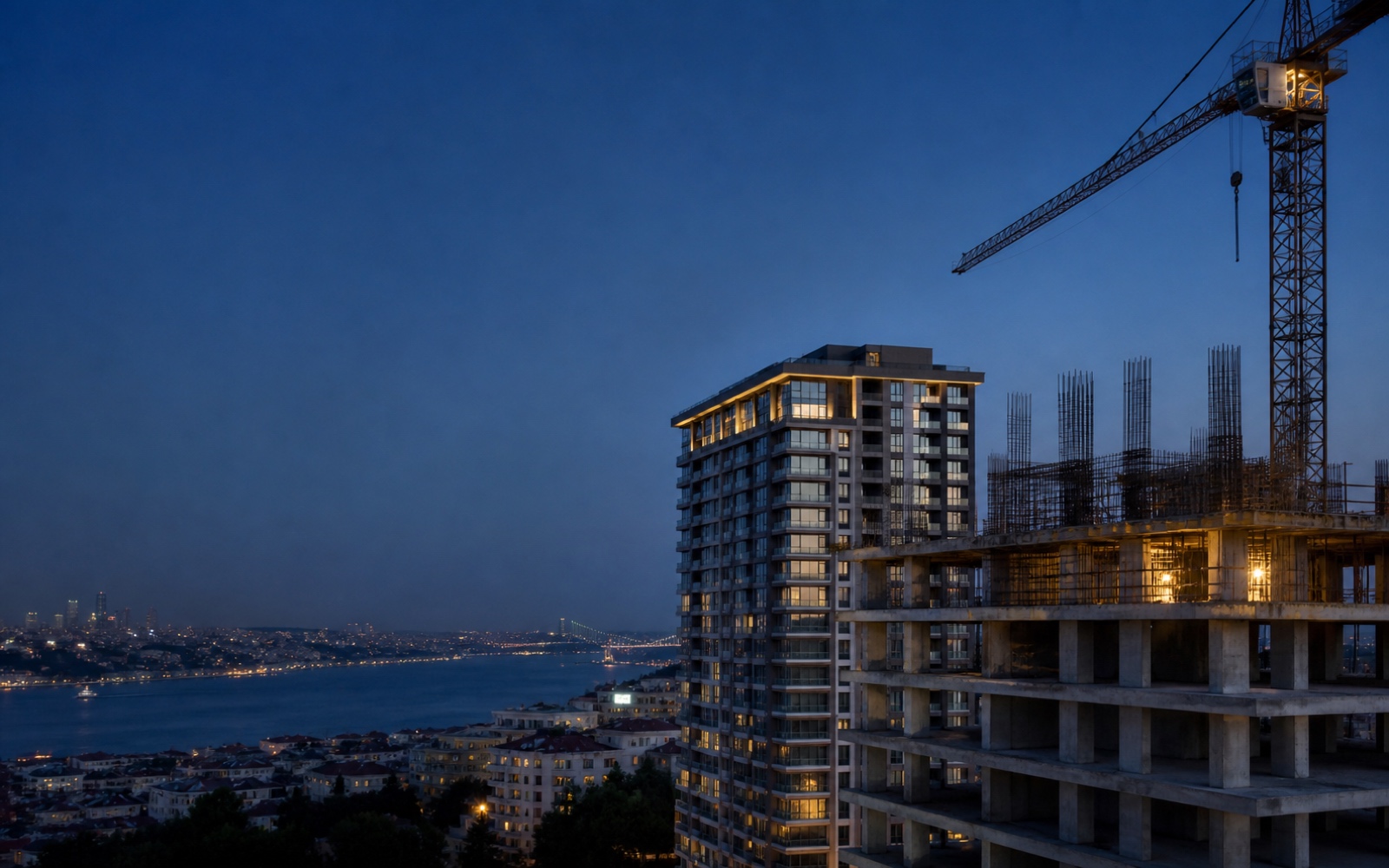
Buying an apartment in Istanbul or a villa on the Turkish coast is one of the most common reasons foreigners engage with Turkish law. Since the Kahramanmaraş earthquakes of 6 February 2023, one question sits above all others for any serious buyer: is the building actually safe? Earthquake safety when buying property in Turkey is no longer a technical afterthought. It is a legal due-diligence question, because the answer is recorded, or conspicuously missing, in the permits, the inspection file, the land register and the insurance system. This 2026 guide explains the building-safety laws, what each document does and does not prove, and the remedies available if a structure turns out to be defective.
Key Takeaways: What You Need to Know
Since 1 January 2019, new, altered and enlarged buildings must be designed to the Turkish Building Earthquake Regulation (TBDY 2018).
Two documents matter most: the building permit (yapı ruhsatı) and the occupancy permit (yapı kullanma izin belgesi, or iskan). Never buy without seeing both; neither certifies how the structure will perform in an earthquake.
A "risky building" (riskli yapı) finding under Law No. 6306 is recorded in the land register, and the demolition procedure is addressed to whoever owns the units at the time.
A sale of a unit covered by compulsory earthquake insurance (DASK) cannot be registered without a policy valid on the transaction date.
Seller liability for a defective building is time-barred five years after ownership passes (twenty with gross fault); inspection-firm liability for the load-bearing system lasts fifteen years from the occupancy permit.
Why Earthquake Safety Is a Legal Issue, Not Just Engineering
Two disasters shaped Turkish building law. The Marmara earthquakes of August and November 1999 were followed by compulsory earthquake insurance, introduced by decree-law in November 1999, and by the building-inspection regime that became Law No. 4708 in 2001. The 2023 earthquakes were followed by further amendments, including Law No. 7471 in 2023, which amended the urban-transformation law, and Law No. 7579 in 2026, which amended the building-inspection law. Read together, these statutes make building safety a question of who designed, supervised, altered and insured the building.
The ownership entries of a title deed (tapu) tell you who owns the property; they do not certify that the structure meets seismic rules. That is why proper real estate due diligence in Turkey must extend to the building's permit, inspection and insurance file.
The Legal Framework Governing Building Safety in Turkey
The Turkish Building Earthquake Regulation (TBDY 2018)
The Turkish Building Earthquake Regulation (Türkiye Bina Deprem Yönetmeliği, TBDY 2018) was published in the Official Gazette on 18 March 2018 and entered into force on 1 January 2019 (Article 5). Under Article 1 it sets the minimum rules for the earthquake design and construction of all public and private buildings that are newly built, altered or enlarged, and for assessing and strengthening existing buildings. Article 4 repealed the 2007 regulation on buildings in earthquake zones. A building designed before 2019 was therefore designed under earlier rules, which makes the design and permit dates basic data points. Whether a particular building performs adequately is a question only a structural engineer can answer.
Building Inspection Law No. 4708 (Yapı Denetimi)
Law No. 4708 was adopted in 2001. It started in 19 pilot provinces, including Istanbul, Antalya and İzmir (Article 11), and the official text records a Council of Ministers decision applying it in all provinces from 1 January 2011. Under Article 2, buildings within its scope are supervised by a licensed inspection firm (yapı denetim kuruluşu) that reviews the soil reports and projects, checks materials and workmanship, and reports deviations from the permit to the authority.
Two limits matter. Article 1 excludes, among others, detached buildings of at most two storeys, not counting the basement, with a total construction area of up to 200 square metres, unless several detached buildings on the parcel together exceed that area; for those, the architects and engineers carry technical responsibility under the Zoning Law. And under Article 3, inspection firms, their architects and engineers, the project authors, laboratory staff and the contractor are liable to the building owner and the relevant administration, each in proportion to fault, for damage caused by work that breaches the permit or technical rules. That liability lasts fifteen years for the load-bearing system and two years for other parts, from the date of the occupancy permit. Whoever makes a major alteration without permission after that date is liable for the damage it causes.
Urban Transformation Law No. 6306
Law No. 6306 on the Transformation of Areas Under Disaster Risk defines a risky building in Article 2 as one that has completed its economic life or is found, on scientific and technical data, to carry a risk of collapse or heavy damage. Under Article 3, as rewritten by Law No. 7471, the assessment is commissioned primarily by the owners, at their own expense, from institutions licensed by the Urban Transformation Presidency (Kentsel Dönüşüm Başkanlığı), which may also act of its own motion. Owners may object within fifteen days, and a risky finding is notified to the land registry within ten working days for entry in the declarations section (beyanlar) of the register.
Zoning Law No. 3194: Permits, Occupancy and the 2018 Amnesty
Article 21 of the Zoning Law (İmar Kanunu, Law No. 3194) makes a building permit compulsory, and changes to a permitted building need a new one, except listed repairs and other alterations that do not affect load-bearing elements. Under Article 30 the occupancy permit is issued once the building is found to conform to the permit and its annexes; it is deemed granted if the authority does not decide within thirty days, and it does not release the owner from liability for breaches of the law or the permit. Under Article 32, a building found in breach of its permit is reported to the land registry within seven days for entry in the declarations section.
Temporary Article 16, added in 2018, created the zoning amnesty (imar barışı) for buildings erected before 31 December 2017, which could obtain a building registration certificate (yapı kayıt belgesi). The statute says the particulars are entered on the basis of the owner's declaration and that the certificate remains valid until the building is rebuilt or transformed. Nothing in the article makes it a structural assessment.
Compulsory Earthquake Insurance: Law No. 6305 (DASK)
Under Article 10 of the Disaster Insurance Law (Law No. 6305), condominium units, homes built on registered private land and commercial units inside them must be insured by their owner or usufruct holder, and the policy is renewed every year. It covers material damage to the building caused directly by an earthquake and by fire, explosion, tsunami or landslide resulting from it (Article 2). The maximum sum insured is set each year by the Minister (Article 13), so check the current ceiling.
Article 11 bars the land registry from registering owner-requested transactions on a covered unit without a policy valid on the transaction date. Article 10 lets the insurer refuse buildings built contrary to the legislation and project, and excludes buildings whose load-bearing system has been harmfully altered or weakened. Under Article 12 the owner loses compensation if the damage results from such an alteration, so a column removed to open up a ground-floor shop can become an insurance problem as well as an engineering one.
What Each Document Proves, and What It Does Not
| Document | Legal basis | What it establishes | What it does not establish |
|---|---|---|---|
| Building permit (yapı ruhsatı) | Law 3194, Art. 21 | Construction was authorised on approved projects | That the building was built as approved |
| Occupancy permit (iskan) | Law 3194, Art. 30 | The authority found the building consistent with the permit, or did not decide within 30 days | It does not free the owner from liability for breaches |
| Registration certificate (yapı kayıt belgesi) | Law 3194, Temporary Art. 16 | A pre-2018 unlicensed or non-conforming building was registered | Rests on the owner's declaration; not a structural assessment |
| Inspection file | Law 4708, Arts. 1–3 | A licensed firm supervised projects, materials and works | Small detached buildings may be outside the system |
| Risky-building finding | Law 6306, Arts. 2–3 | A risk of collapse or heavy damage, or an expired economic life | A clean register does not mean the building was tested |
| DASK policy | Law 6305, Arts. 10–13 | Earthquake damage cover up to the annual maximum | Loss above the ceiling or caused by harmful structural alterations |
A Pre-Purchase Checklist for Foreign Buyers
Read the declarations section of the title for a risky-building or zoning-breach notation. Our guide to the tapu process for foreign buyers covers the title search itself.
Match both permits to the building. Extra storeys, enclosed balconies and converted basements are where a building and its permit part company.
Establish the design date and the inspection route: TBDY 2018 or earlier rules, Law 4708 supervision or the small-building exemption, and which firm signed off.
Look for structural alterations and confirm the DASK policy will be valid on the transfer date.
Commission an independent engineering survey. You cannot order a Law 6306 assessment yourself: Article 3(8) sanctions a licensed institution that carries one out at the request of a non-owner. If you want one, make it a condition that the seller commissions it before completion.
Get the seller's statements in writing. Under Article 222 of the Turkish Code of Obligations (TBK), the seller is not liable for defects you knew of, and answers for defects an adequate inspection would have revealed only if it specifically undertook there were none.
Buying a Unit in a Building Already Declared Risky
Buying into a building already in the Law 6306 procedure is lawful, but its deadlines and majority rules are addressed to the owners, and you become one.
Demolition. Owners get a period of not more than ninety days to demolish; if they do not act even after a further warning, the civil authorities evacuate and demolish (Article 5(3)), and the costs are collected from the owners pro rata to their shares (Article 5(4)).
Majority rule. Rebuilding, share sales and flat-for-land or revenue-sharing deals are decided by an absolute majority of co-owners by shares (Article 6(1)). Dissenting owners have fifteen days to examine or accept the offer; after that, their shares are auctioned to the agreeing co-owners at not less than the market value set by the Presidency.
Buying a dissenter's share. A third party who buys such a share before the statutory sale must give the land registry an electronic notification address before the transfer can be registered (Article 6(1)).
Utilities. On request of the Presidency, TOKİ or the administration, and after hearing the right holders, electricity, water and gas are not supplied and existing supply is stopped (Article 4(3)).
Your Remedies if Structural Defects Appear After Purchase
Against the seller. The TBK applies its sale-of-goods rules to real estate by analogy (Article 246). The seller is liable for promised qualities that are missing and for defects that remove or significantly reduce the property's value or usefulness, even without knowing of them (Article 219). You must inspect as soon as the ordinary course of things allows, notify defects within a reasonable time, and notify a hidden defect immediately on discovery (Article 223). You may then rescind, claim a price reduction or demand free repair, with damages reserved (Article 227). A clause excluding liability is void if the seller was grossly at fault (Article 221). Building-defect claims are time-barred five years after ownership passes, or twenty years with the seller's gross fault (Article 244).
Against a developer selling to a consumer. If the developer sells commercially and you buy for non-commercial purposes, Law No. 6502 applies (see consumer rights under Law 6502). The limitation period for a defective home or holiday property is five years from delivery (Article 12(1)), and it does not apply where the defect was concealed through gross fault or fraud (Article 12(3)). A chosen repair or replacement must be completed within sixty working days (Article 11(4)), and no pre-paid housing sale may be signed with a consumer before the building permit is issued (Article 40(3)).
Against the inspection firm, engineers and contractor. The Law 4708 liability above is counted from the occupancy permit, so the iskan date tells you whether the damage falls within the liability period. After an earthquake, DASK must pay within thirty days once the documents and damage assessment are complete (Law 6305, Article 13).
Concerned about a specific building in Istanbul or elsewhere in Turkey? Our real estate lawyer in Turkey team can pull the permit, inspection and land-register records and flag problems before you sign. Contact Istanbul Attorneys: +90 850 242 4043 | WhatsApp https://wa.me/908502424043.
Common questions about this topic
Can foreigners check a building's earthquake risk before buying in Turkey?
Yes. You can review the building and occupancy permits, the inspection file and the land register, and instruct your own structural engineer. A formal risky-building assessment under Law No. 6306 is commissioned by the owners, so ask the seller to order one. A local lawyer can gather these records before you commit.
Is earthquake insurance mandatory when buying property in Turkey?
For most homes, yes. Law No. 6305 requires owners to insure with DASK and renew every year, and the registry will not register the sale without a valid policy. Cover stops at the annual maximum, so ask an insurer whether you need more.
What is the difference between a building permit and an occupancy permit?
The building permit (yapı ruhsatı) authorizes construction. The occupancy permit (iskan) confirms that the finished building conforms to the permit and its annexes. Buying without iskan is a significant legal and safety risk, and iskan does not free the owner from liability for breaches.
Does a "risky building" status pass to a new owner?
In effect, yes. The finding sits in the land register, and the demolition, cost and majority rules of Law No. 6306 apply to whoever owns the units. Verify the status before signing.
Are buildings constructed before 2019 automatically unsafe?
No. They were designed under earlier rules, but a risky-building finding requires an expired economic life or a collapse or heavy-damage risk established on technical data. An older date should trigger closer scrutiny and an independent structural assessment.
Can I sue if my newly bought apartment has structural defects?
Potentially yes: against the seller under the TBK, against a developer under consumer law, and against the inspection firm, engineers and contractor under Law No. 4708, each within its own period. Evidence and timing are critical, so consult a lawyer promptly.
Does a zoning amnesty certificate mean the building is safe?
No. A yapı kayıt belgesi records an unlicensed or non-conforming building on its owner's declaration. It is not a structural test.
Will DASK pay if the building was structurally altered?
Not where the damage results from alterations contrary to the project that adversely affect the load-bearing system; the owner must prevent such changes and loses compensation in that case.
This guide is general information on Turkish law, not legal advice on your own matter. Rules and practice change; check the position before you act.