
Corporate & Commercial
Ship Arrest in Turkey: 2026 Guide for Foreign Claimants
How to arrest a ship in Turkey: procedure, counter-security, costs and timing. Maritime lawyers in Istanbul guide foreign claimants under TCC Articles 1352–1376 and the 1999 Arrest Convention.
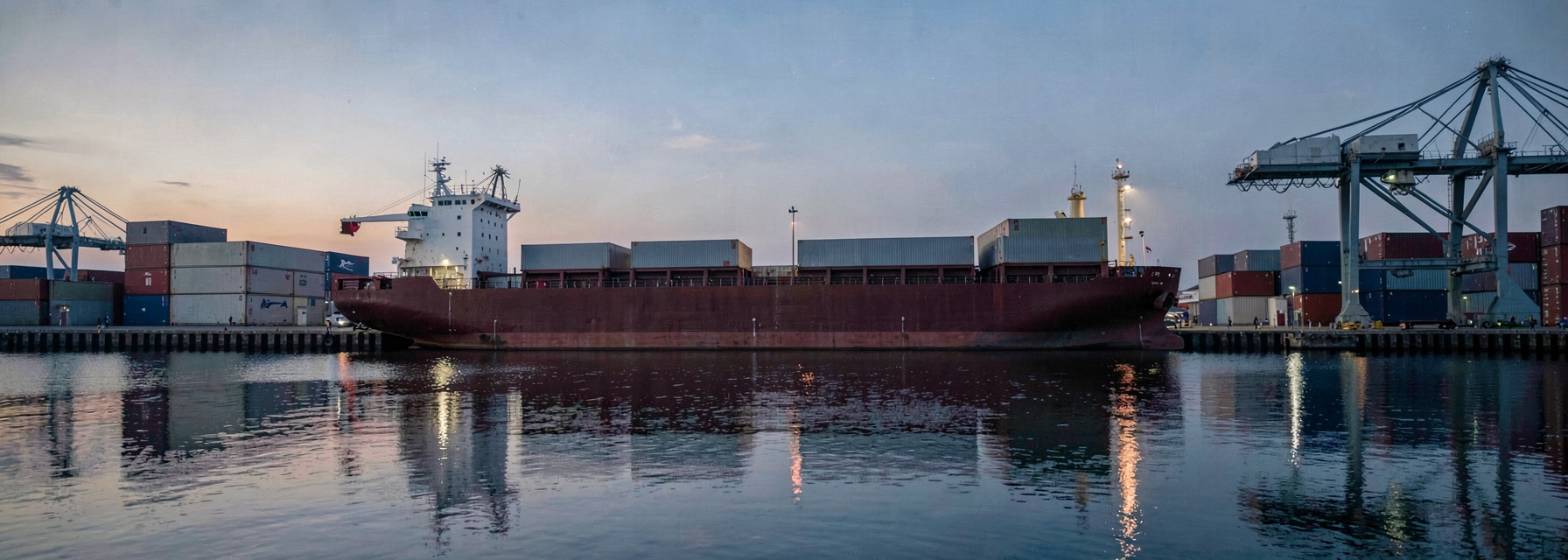
If a vessel carrying your cargo, securing your unpaid bunker invoice, or owing your crew their wages is calling at a Turkish port, time is your enemy: a ship may be in Turkish waters only briefly. Ship arrest in Turkey — the precautionary attachment (ihtiyati haciz) of a vessel to secure a maritime claim — is the tool Turkish law provides for exactly this situation. The court may decide without hearing the shipowner, and once the enforcement office executes the order the ship is prevented from sailing and the coast guard, the harbour master and customs are notified.
This guide walks you, the foreign claimant, through the entire procedure under the Turkish Commercial Code (TCC), the 1999 International Convention on Arrest of Ships (to which Türkiye acceded in 2019), and the practical realities of arresting a ship in Istanbul, Tuzla, Aliağa, Mersin, or any other Turkish port.

Key Takeaways: What You Need to Know
Maritime claims only: A ship can be arrested only for one of the 22 maritime claims listed in Article 1352 of the Turkish Commercial Code (TCC); no arrest is available for any other claim (Article 1353(3)).
Security is mandatory: Every claimant, Turkish or foreign, must give security of 10,000 Special Drawing Rights (SDR) (Article 1363(1)). The shipowner can ask the court to increase it and the claimant can ask for a reduction; crew members claiming wages and related sums are exempt.
Without notice, but with a deadline: The court may decide without hearing the shipowner, and the claimant must ask the enforcement office (icra dairesi) to execute the order within three business days, or the order lapses by itself (Article 1364).
Other ships of the debtor: Article 1369(2) TCC allows the arrest of another ship owned by the person liable for the claim, but not in disputes over the ownership or possession of a ship (Article 1369(3)).
Court and appeal: For a foreign-flagged ship, only the court of the place where she is anchored, moored or berthed can order the arrest (Article 1355). Maritime cases belong to the commercial courts of first instance (asliye ticaret mahkemesi), and the Council of Judges and Prosecutors may designate particular ones for maritime matters (Article 5(2)). An appeal against a refusal goes to the regional court of appeal, whose decision is final (Enforcement and Bankruptcy Law, İİK, Article 258(3)).
The Legal Framework: TCC Book Five and the Arrest Convention 1999
Turkey's ship arrest regime is contained in Articles 1352–1376 of the Turkish Commercial Code No. 6102, which entered into force on 1 July 2012. They sit in Book Five of the TCC, dedicated entirely to maritime trade (Deniz Ticareti). Where Book Five has no specific rule, the Enforcement and Bankruptcy Law (İİK) applies (Article 1351).
Türkiye's accession to the 1999 International Convention on Arrest of Ships was approved by Law No. 6904, adopted on 2 March 2017 and published in the Official Gazette on 25 March 2017. Türkiye deposited its accession with the United Nations on 11 September 2019, with a declaration reserving priority for the 1926 Brussels Convention on the immunity of State-owned vessels and its 1934 Protocol.
Two practical consequences flow from the TCC. First, you cannot arrest a ship in Turkey on the basis of an ordinary commercial debt, a tort claim unrelated to a vessel, or a personal claim against the shipowner — only the closed list of maritime claims in Article 1352 qualifies (Article 1353(3)). For those claims, arrest is also the only protective measure: an interim injunction (ihtiyati tedbir) or any other form of detention of the ship cannot be requested (Article 1353(1)). Second, the court does not decide the merits at the arrest stage. Under Article 1362 it is enough for the claimant to produce evidence that satisfies the court that the claim is one of the maritime claims in Article 1352 and shows its monetary value; the merits are left to the substantive proceedings, which may run before arbitrators or a foreign court (Article 1356).
Grounds for Ship Arrest: Maritime Claims Under Article 1352 TCC
The TCC lists 22 maritime claim categories that may justify a ship arrest in Turkey. The most commercially important ones are: damage caused by the ship (collision, wash damage to a quay); loss of life or personal injury (crew or passenger casualties, MLC 2006 personal injury claims); salvage (under LOF or under the 1989 Salvage Convention); charterparty disputes (unpaid hire, demurrage, off-hire deductions); cargo claims (loss, damage, short delivery, mis-delivery); general average (contributions under York-Antwerp Rules); bunker supply (unpaid bunker invoices); crew wages (master and crew wages, repatriation costs, MLC 2006 obligations); mortgage and ship hypothec (default under a registered ship mortgage); disputes over ownership or possession (S&P disputes, beneficial ownership conflicts); and pilotage, towage, and port dues.
For a comprehensive list, see the official text of the Turkish Commercial Code (Mevzuat.gov.tr).
Some maritime claims also give a maritime lien (gemi alacaklısı hakkı) under Article 1320 TCC: crew wages and related sums, personal injury connected with the operation of the ship, salvage, port, canal and pilotage dues, tort-based property damage caused by the operation of the ship, and general average contributions. The lien is a statutory pledge over the ship (Article 1321), and all of these except general average rank ahead of every registered or unregistered pledge and mortgage on the ship (Article 1323). It is short-lived: apart from general average, the lien lapses (düşer) at the end of one year — counted for crew claims from the day the crew member leaves the ship — unless before then the ship has been arrested and, as a result, sold in enforcement proceedings (Article 1326).
How to Arrest a Ship in Turkey: Step-by-Step Procedure
The procedural skeleton for a ship arrest in Turkey has five stages: pre-action investigation, filing, security, the arrest order and its execution, and the follow-up proceedings on the merits. The TCC sets no time limit for the court's decision, so no fixed turnaround can be promised; what the claimant controls is having the documents ready and the vessel identified before filing.
Step 1 — Pre-Action Investigation
Before filing, your Turkish maritime lawyer must verify three things. First, where the vessel is or will be: for a foreign-flagged ship, only the court of the place where she is anchored, moored or berthed can order the arrest (Article 1355). Second, that the ship's current ownership and flag match the debtor, for example through AIS data by MMSI or IMO number and the ship's certificate of registry obtained through the local agent. Third, that the underlying claim qualifies as a maritime claim and that the documentary evidence (charterparty, bill of lading, invoice, salvage agreement, P&I correspondence) is translated into Turkish by a sworn translator (yeminli tercüman).
Step 2 — Filing the Arrest Petition
The petition for precautionary attachment (ihtiyati haciz) is filed with the competent commercial court of first instance. For a Turkish-flagged ship, Article 1354 also allows filing at the court of the ship's registry or, for an unregistered ship, at the owner's domicile. The petition must state the maritime claim and its TCC Article 1352 categorisation; identify the vessel by name, IMO number, flag and current location; annex the supporting evidence with sworn Turkish translations; and offer the security required by Article 1363.
Step 3 — Security
The claimant must give security. Under Article 1363 TCC the security is 10,000 SDR, and it is mandatory. The shipowner may ask the same court at any stage to increase it; the court then takes into account the ship's daily running costs and the earnings lost while she is detained, and sets a deadline for the additional security — if it is not given in time, the arrest order lapses by itself. The claimant may likewise ask for a reduction. Crew members claiming the wages and related sums listed in Article 1320(1)(a) are exempt from giving security.
Step 4 — Arrest Order and Execution
The court may decide without hearing the shipowner (İİK Article 258(2), applied through TCC Article 1351). A refusal must be reasoned and can be appealed to the regional court of appeal, whose decision is final (İİK Article 258(3)). Once the order is given, the claimant must ask the enforcement office (icra dairesi) within three business days to execute it; otherwise the order lapses by itself (Article 1364). The enforcement officer then prevents the ship from sailing and places her in custody, whatever her flag or registry, and immediately notifies the coast guard command or the police, the harbour master (liman başkanlığı) and the customs office; the ship's registry and, for a foreign-flagged ship, the nearest consulate of the flag state are notified on the next business day (Article 1366). If the ship is already under way, the order against a foreign-flagged vessel can be enforced with the help of the coast guard until she leaves Turkish territorial waters (Article 1367(1)(b)).
Step 5 — The One-Month Deadline for Proceedings on the Merits
Once the arrest is executed, the seven-day time limits in Article 264 of the İİK apply to ships as one month (TCC Article 1376). Within that month — counted from execution, or from service of the arrest record if it was executed in your absence — you must start enforcement proceedings or bring the action on the merits; if you do not, the arrest ceases to have effect (İİK Article 264). The arrest court and the enforcement office that executed the arrest also have jurisdiction over that action and those proceedings, unless there is a jurisdiction or arbitration agreement on the merits (TCC Article 1359). If the claim is subject to a foreign arbitration clause or a foreign court, confirm before filing which step will satisfy this deadline in your case.
Have a Vessel Calling at a Turkish Port?
Time-critical ship arrests need a Turkish maritime lawyer on the file before the vessel sails. Contact Istanbul Attorneys: +90 544 809 1942 | WhatsApp | info@istanbulattorneys.com.
Common questions about this topic
How long does it take to arrest a ship in Turkey?
The TCC sets no time limit for the court's decision, so no fixed turnaround can be promised. The court may decide without hearing the shipowner, and once the order is given you have three business days to ask the enforcement office to execute it (TCC Article 1364). Having the sworn Turkish translations of your evidence ready before filing is the step you control.
Do I need to come to Turkey to arrest a ship here?
No. The entire procedure can be handled by a Turkish maritime lawyer holding a power of attorney issued by you and apostilled.
Can I arrest a vessel for a debt owed by the time charterer rather than the registered owner?
It depends on the type of claim. For a debt owed by a charterer, Article 1369(1) TCC allows the arrest of the ship concerned mainly where the claim gives a maritime lien under Article 1320 — crew wages, personal injury, salvage, port, canal and pilotage dues, tort-based property damage and general average — or is secured by a mortgage or similar charge on the ship. Bunker supply is a maritime claim (Article 1352(l)) but is not on the lien list. Under Article 1369(2), other ships owned by the charterer who is liable can also be arrested. Case-specific analysis is essential.
What happens if my substantive case fails after the arrest?
A claimant whose arrest proves unjustified is liable for all the loss the shipowner and third parties suffer because of it (İİK Article 259, applied through TCC Article 1351). The security answers for that loss but does not cap it. The damages action can be brought before the court that ordered the arrest, and if the merits are pending before a court or arbitrators, their outcome is decided first (TCC Article 1361). This is why a robust, evidence-backed claim is essential before triggering an arrest.
Can a Turkish-flagged vessel be arrested in Turkey by a foreign claimant?
Yes. The arrest rules apply to every ship whatever her flag or registry (TCC Article 1366(1)), and they draw no distinction by the claimant's nationality. What matters is whether the claim falls within the Article 1352 list and which court has jurisdiction: for a Turkish-flagged ship, the court where she is anchored, moored or berthed, or the court of her registry (Article 1354). If she is at sea, the order is served on the owner, who is warned to give security within ten days or hand the ship over to the enforcement office on her next voyage (Article 1367(1)(a)).
Are vessels under the Turkish International Ship Registry (TUGS) treated differently?
No, not for arrest purposes. TUGS-registered vessels (governed by Law No. 4490) fly the Turkish flag and enjoy tax exemptions (Articles 7 and 12), but Law No. 4490 has no arrest rules of its own, and the TCC arrest rules apply whatever a ship's registry (Article 1366(1)).
This guide is general information on Turkish law, not legal advice on your own matter. Rules and practice change; check the position before you act.